The carved mask
Cut from a single block, painted, and worn to be moved rather than looked at — which is why the features are cut as deep as they are.
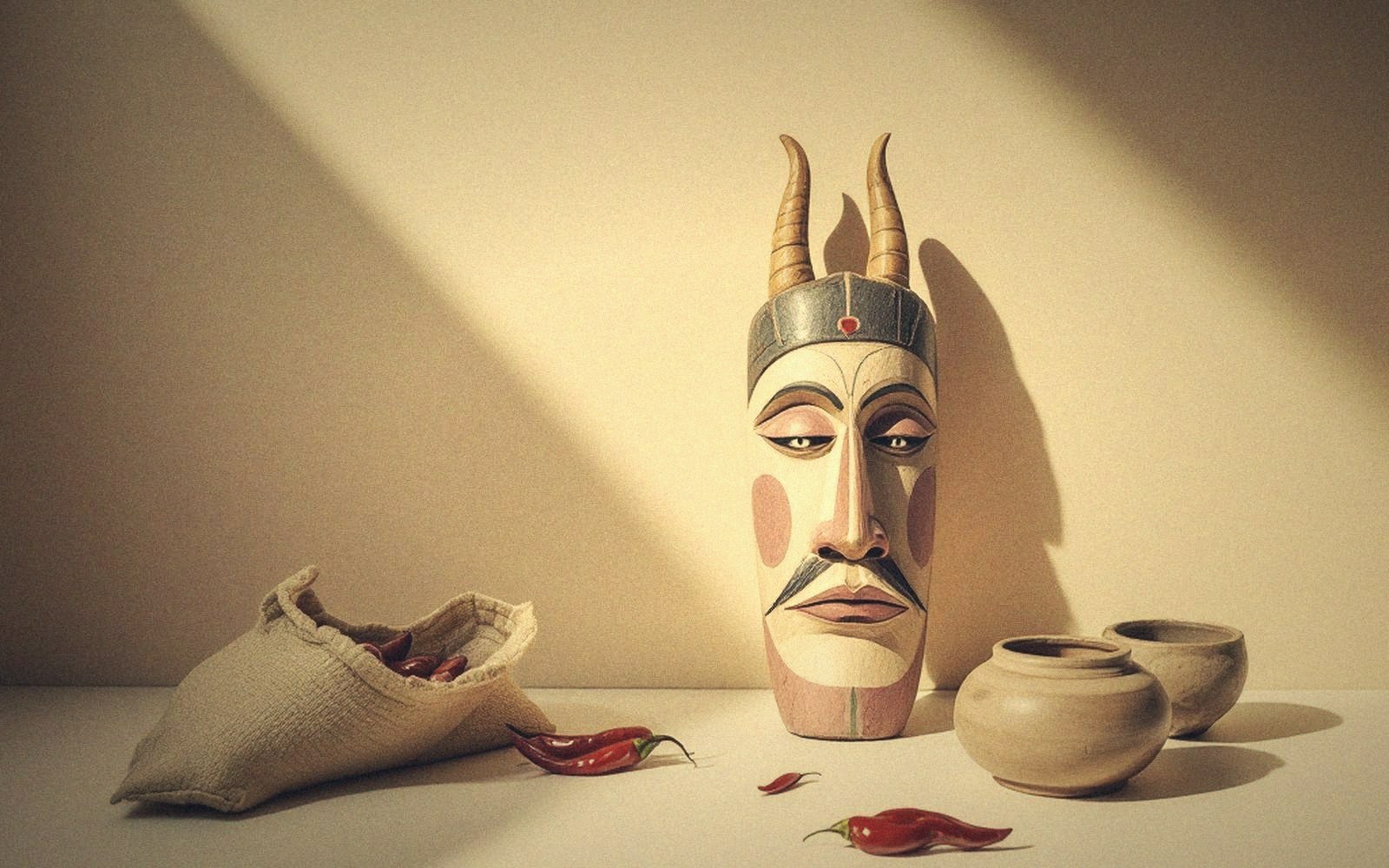
A face built for motion, not for walls
Carved wooden masks from Latin America are often described as art objects, and many end up as such — fixed to gallery walls, lit from the front, observed from a distance. This framing misreads them almost completely. The mask is made to move. Everything about its construction — the depth of the eye sockets, the exaggerated ridge of the brow, the undercutting around the mouth — is calibrated for a body in motion, a face passing through firelight, seen from ten metres and from the side.
The carver begins with a single block of wood, almost always cut green. Copal, cedar, pine and colorín (the coral tree, Erythrina species) are the common choices across highland Mexico and Guatemala; tzompantle in some Oaxacan workshops; softer tropical hardwoods in the Yucatán lowlands. The block is split with a machete and roughed down with an adze before chisels of graduated width take over. The carver works from the profile inward, establishing the overall curvature of the face first — because a mask must curve away from the plane, not sit flat against it, to read as a face on a moving body.
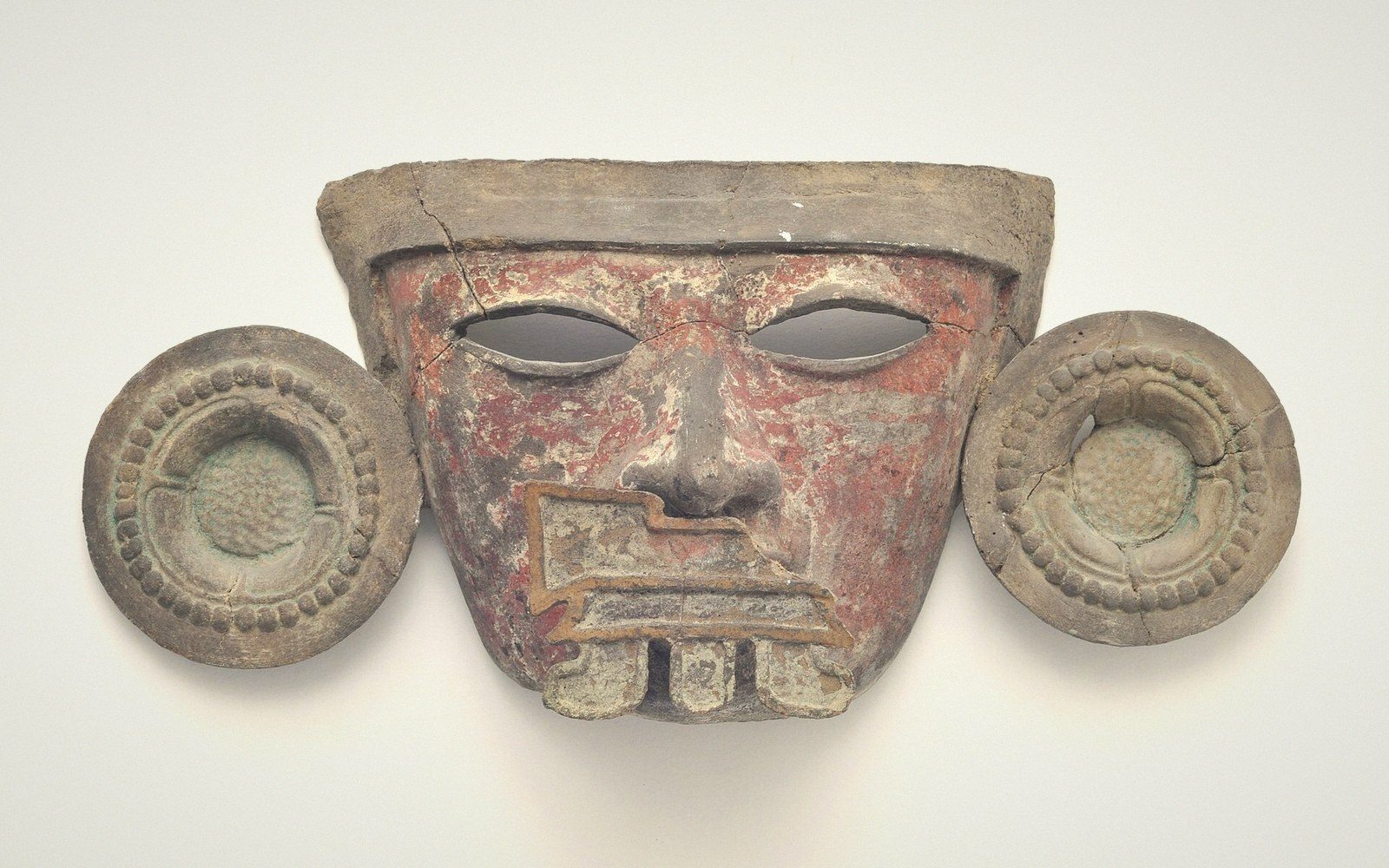
The eye sockets go deep, often four to five centimetres back from the outer rim. This is not stylisation for its own sake. In the midday sun of a festival courtyard, a shallow eye appears as a blank smear. A deep-cut socket throws its own shadow, giving the mask expression at a distance and in changing light.
The same logic governs the nostrils — flared and undercut so that they catch shadow from below — and the teeth, which in many Guerrero and Michoacán traditions are carved individually from bone, antler or hardwood and set into a mortised groove along the jawline. Real teeth, animal or human, appear in older specimens and in certain masks from Nahua-speaking communities in the Sierra de Puebla.
Once carved, the mask is primed. Animal-hide glue mixed with gypsum or calcium carbonate is worked into the grain and sanded back multiple times to build a surface fine enough to hold detail. Paint follows: historically mineral pigments bound in the same size, later commercial aniline powders dissolved in water or alcohol, and more recently acrylic, which many carvers now prefer for its durability across a full festival season. The paint is laid in thin, transparent washes for flesh tones and opaque layers for strong colours. Eyebrows, moustaches, eyelashes and hairlines — some carved, some painted, some made of real hair or dyed fiber and glued — are added last.
What the mask represents determines its additional materials. Diablo (devil) masks of Guerrero are often armoured with mirror fragments that scatter light back into the crowd. Old-man masks — the viejito type found across Michoacán — are made with deliberately loosened lower jaws or articulated cheeks, so that the dancer can manipulate the mask's expression through his own jaw movement. Jaguar masks, widespread through the Nahua and Tlapanec festival traditions of the Costa Chica, are covered in painted spots and fitted with glass eyes set in lead.
The wearing position varies by tradition, but the face-forward position — covering the dancer's own face entirely, with vision through narrow drilled holes behind the pupils — is the most demanding to make correctly. The inner surface is hollowed with curved gouges to reduce weight and fit the face; linen or leather straps are nailed to the interior sides and tied behind the head.
A deep-cut socket throws its own shadow, giving the mask expression at a distance and in changing light.
A mask that fits badly will shift during dance, blocking the wearer's sight. A mask that is too heavy will exhaust the dancer before the procession ends. The carver accounts for both, and this is why significant carvers are known within their communities not by reputation for beauty but for fit.
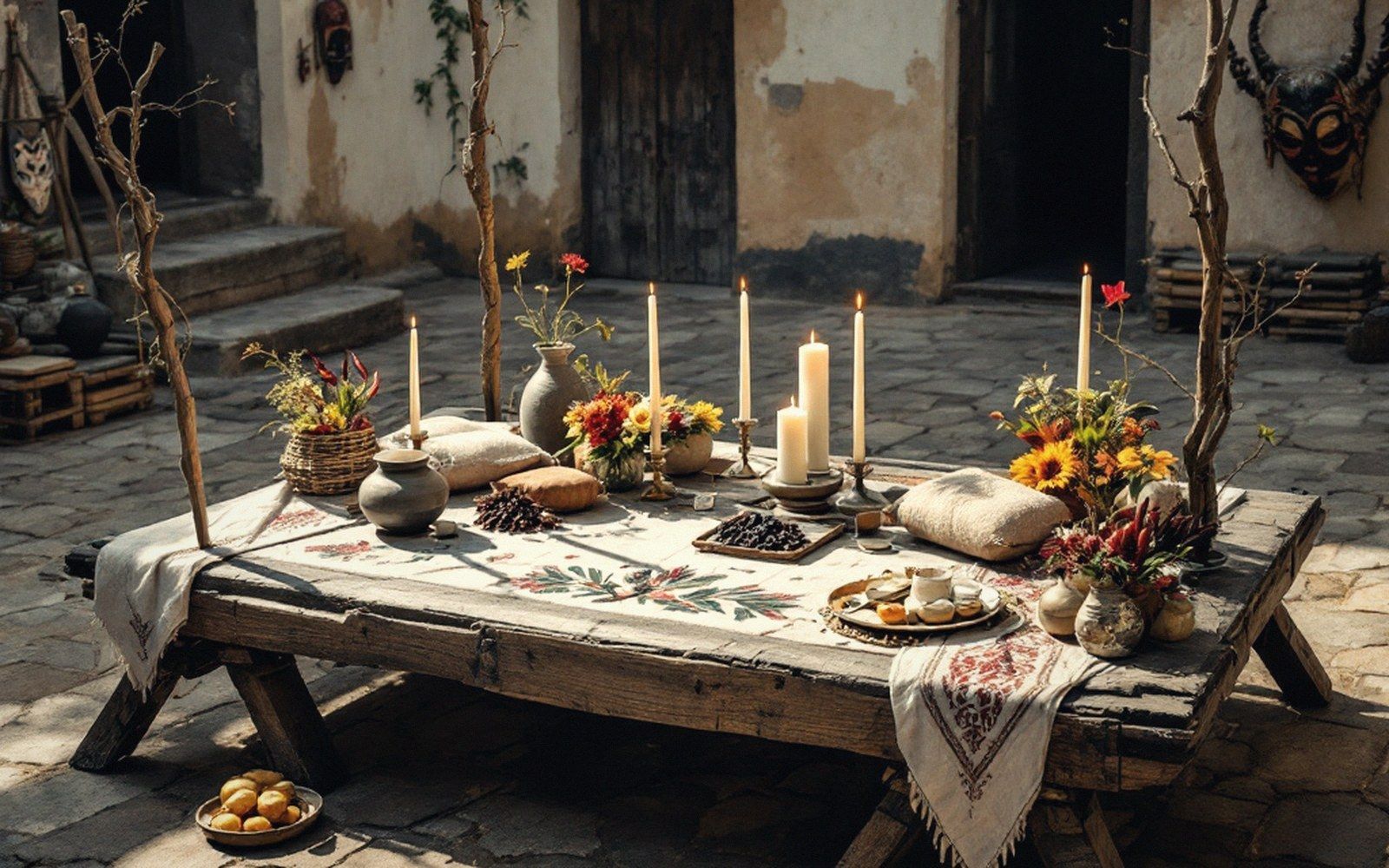
Across Mexico and Guatemala, mask-making remains tightly tied to specific festival cycles: Carnival, Semana Santa, the feasts of patron saints. The same workshop may produce a dozen different character types — Moors, Spaniards, demons, animals — each with its own proportional logic, because each represents a different role in the dance drama and moves accordingly.