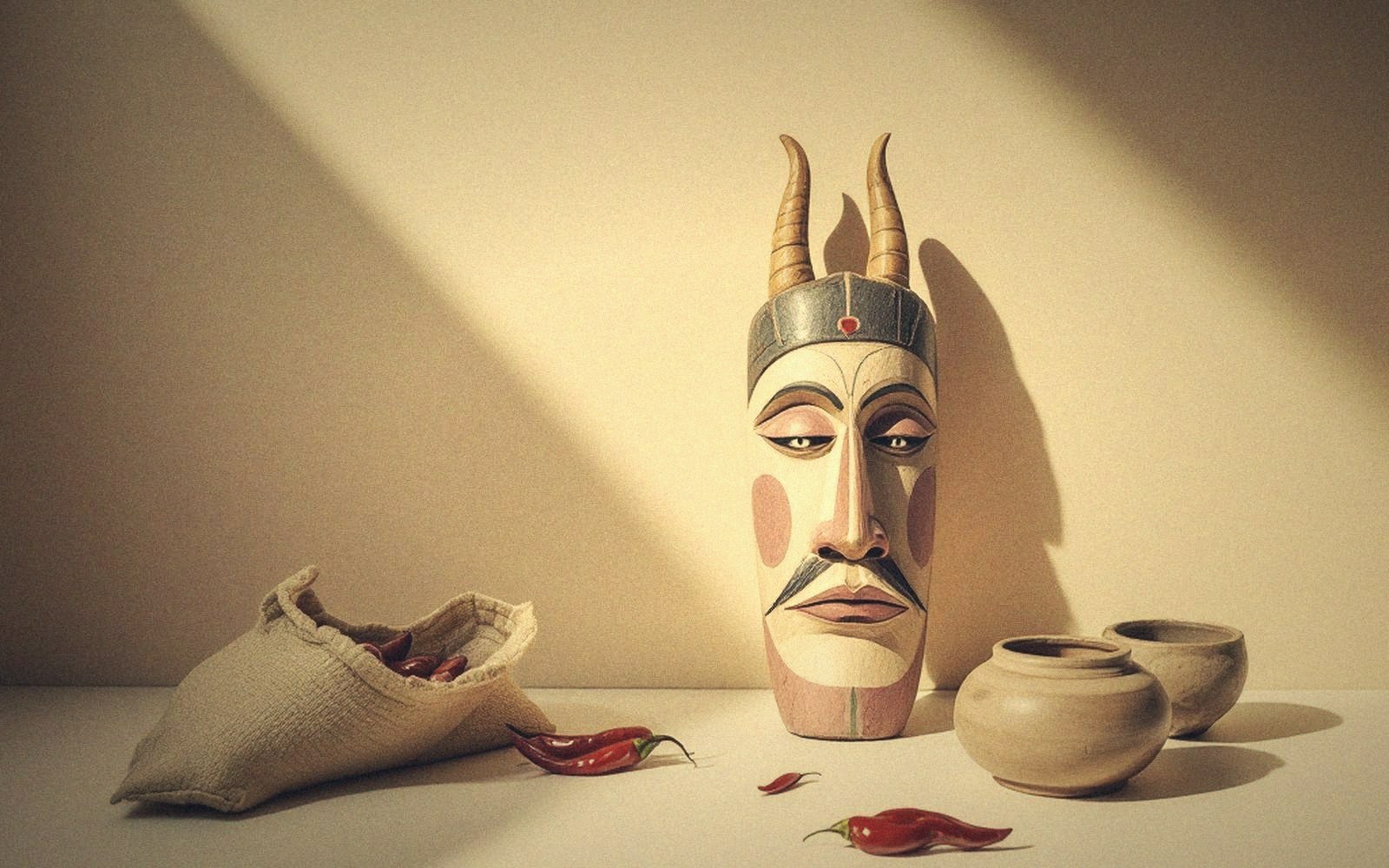
What is carried
Frames, litters and figures built to be shouldered through a street, and the engineering that keeps them upright.
When the object is too large to wear
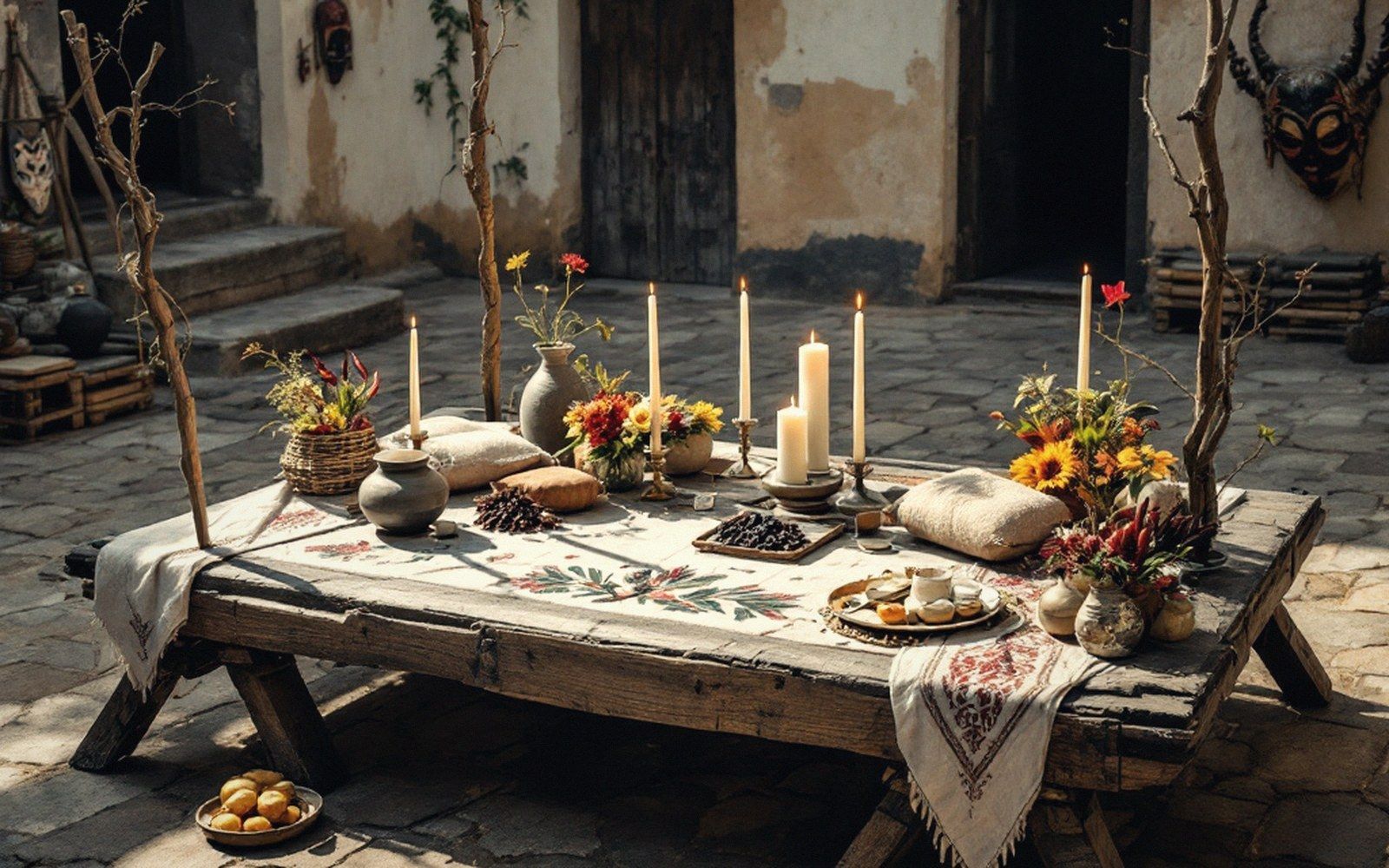
A mask is made to move, but the largest festival figures in Latin America are built for something more ambitious: they are made to be carried, sometimes by dozens of people, through streets that were never widened to receive them.
The basic engineering problem is weight distribution. Mojigangas — the giant articulated figures common to central Mexican festivals — are built around an internal armature of welded steel rod or, in older examples, bamboo lashed with cord. The outer shell is papier-mâché or carved foam over wire mesh. A good mojiganga runs two to four metres tall and must be light enough for one or two carriers working inside the skirt, steering by feel. The weight sits low: the heaviest materials concentrate at the hips and base frame, not the head.
Litters are a different engineering proposition entirely. The andas used in Andean and coastal processions — platforms bearing saints' figures, elaborate floral arrangements or entire narrative scenes — can weigh several hundred kilograms fully dressed. The platform itself is typically heavy-hardwood beams mortised and pinned, not screwed, because bolted joints work loose under rhythmic shouldering. Carrying poles extend well beyond the platform edge, spreading the load across eight, twelve or more cargueros (bearers) in two rows. The coordination problem is solved by a caller who beats rhythm from the front, keeping the rocking motion synchronised so the figure on top sways rather than tips.
The tallest processional forms are the pasos of Holy Week and the giant puppets of Pátzcuaro, where a secondary frame — a mast of aluminium tube pinned through the base — carries the upper structure above the carriers' heads. Guy wires, run diagonally to the platform corners, stop lateral sway. Every joint must be fast to assemble and faster to collapse when the procession ends and a narrow doorway waits.
What all of these structures share is the calculation that the street is the stage, the crowd is the witness, and the object has to survive both.