Tile as cladding
Glazed tile used structurally against weather rather than as ornament.
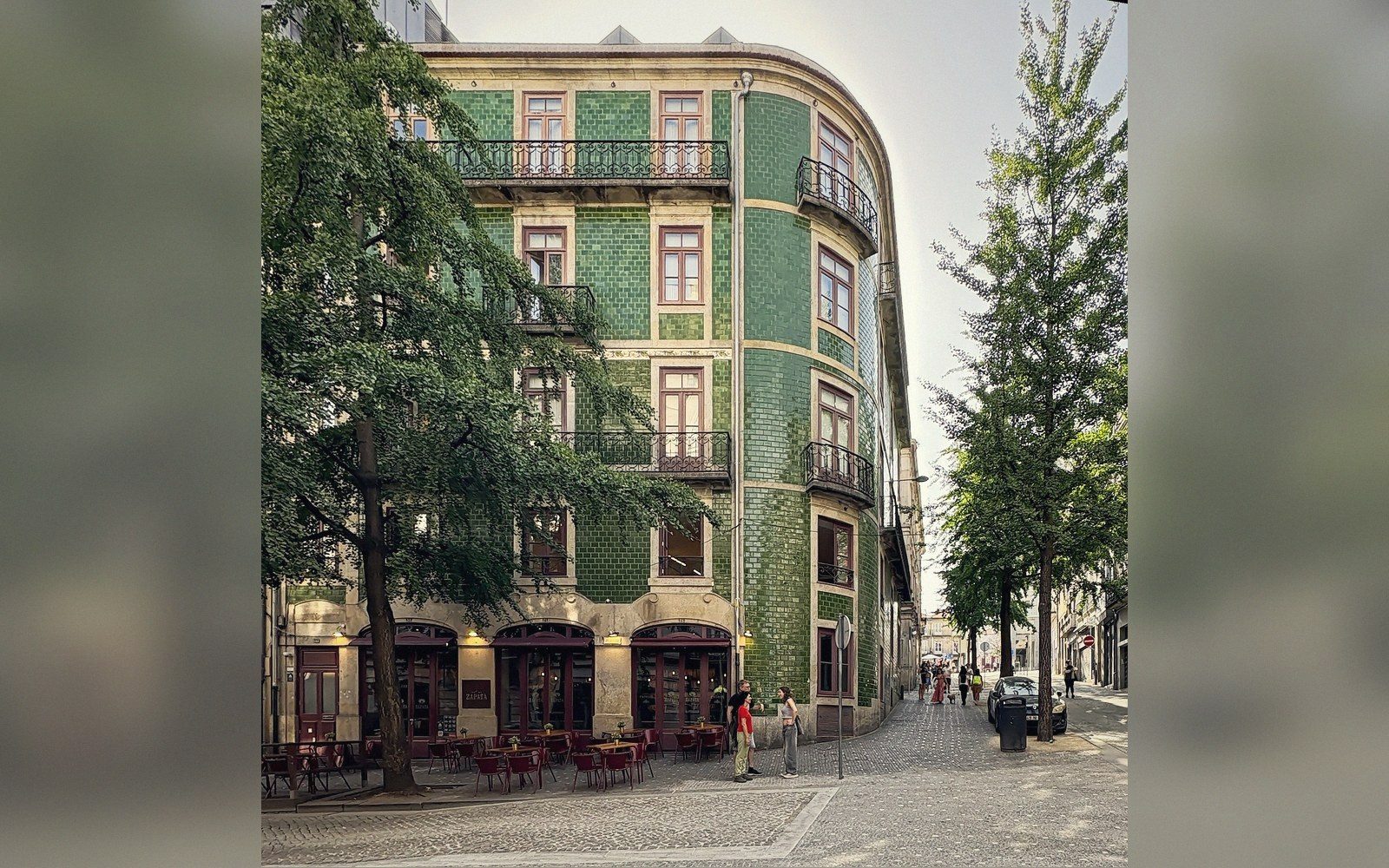
When the wall becomes the glaze
In coastal and tropical cities across Latin America — Recife, Cartagena, Havana, Valparaíso — glazed ceramic tile does a job that paint and lime render cannot sustain for long: it seals the outer wall against salt air, driving rain and the slow violence of humidity. The tile here is not a decorative afterthought applied inside a foyer; it is the building's first line of defence.
The tradition arrived via Portugal, which had itself absorbed Moorish and Flemish influences before shipping the practice west. By the eighteenth century, Lisbon was exporting azulejos — tin-glazed earthenware tiles, typically fifteen centimetres square — to Recife and Belém in quantities that shifted local building logic. Builders realised that a tile skin required almost no repainting, shed water cleanly, and resisted the mould that consumed bare lime plaster within a single wet season. Function made the decision; pattern followed.
What makes the cladding tile distinct from an interior decorative panel is its specification. Tiles meant for exterior walls are thicker — often around twelve millimetres against the eight or nine of floor and wall finish tiles — and fired to a denser body with lower porosity. The glaze is formulated to flex slightly with the substrate rather than crack when thermal movement works the mortar joints.
Where the earlier Portuguese stock was faience (a porous earthenware body under an opaque tin glaze), later production shifted toward stoneware bodies that absorb very little water before the glaze is even considered. In Recife's Santo Antônio district, you can read the building's age partly by tapping: the older azulejo rings hollow and light; nineteenth-century replacements sound denser and harder.
Installation is a two-coat affair. A base render of lime and sand goes onto the masonry first, scratched while wet to give grip; a thinner bedding mortar follows once the base has cured, and the tiles are pressed in and levelled course by course. Joints are kept tight — two millimetres or less on a good exterior job — because a wide joint holds water. On curved or chamfered corners, tiles are either cut to wedge shapes or, in older buildings, replaced by convex rope-moulded ceramic strips purpose-made for the edge condition.
The palette of cladding tiles is not random. Blue and white, blue and yellow, and deep cobalt on cream recur because those colour combinations survive ultraviolet exposure with least fading; the metal oxides in those glazes — cobalt for blue, antimony or iron for yellow — are among the most stable under sustained sunlight. The vivid polychrome panels celebrated in contemporary murals belong largely to sheltered or interior surfaces. What endures on the street elevation is, by necessity, quieter.
