Barro negro
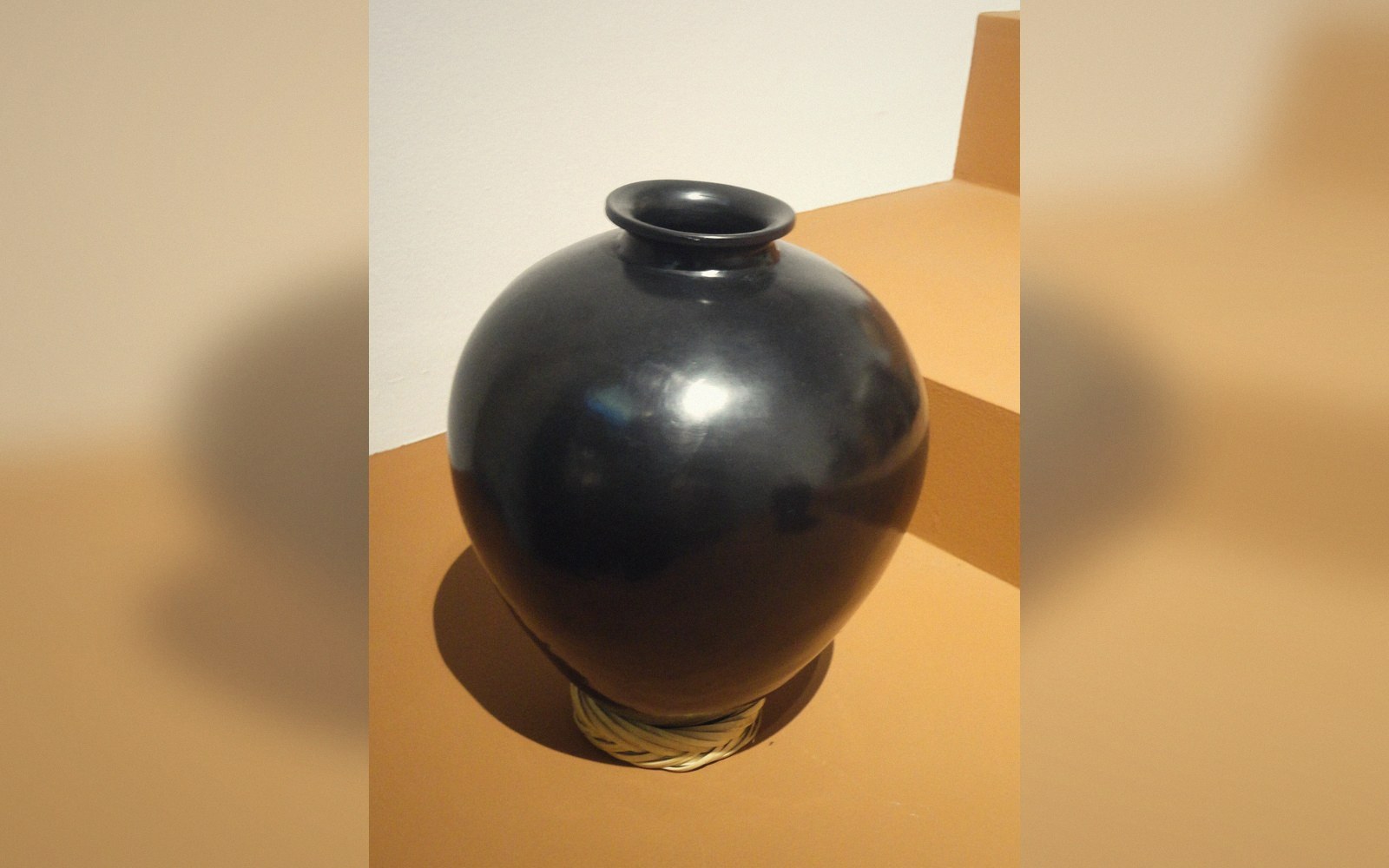
Black clay that is not glazed and not painted: the colour comes from firing, and the shine from burnishing the leather-hard pot with a quartz stone.
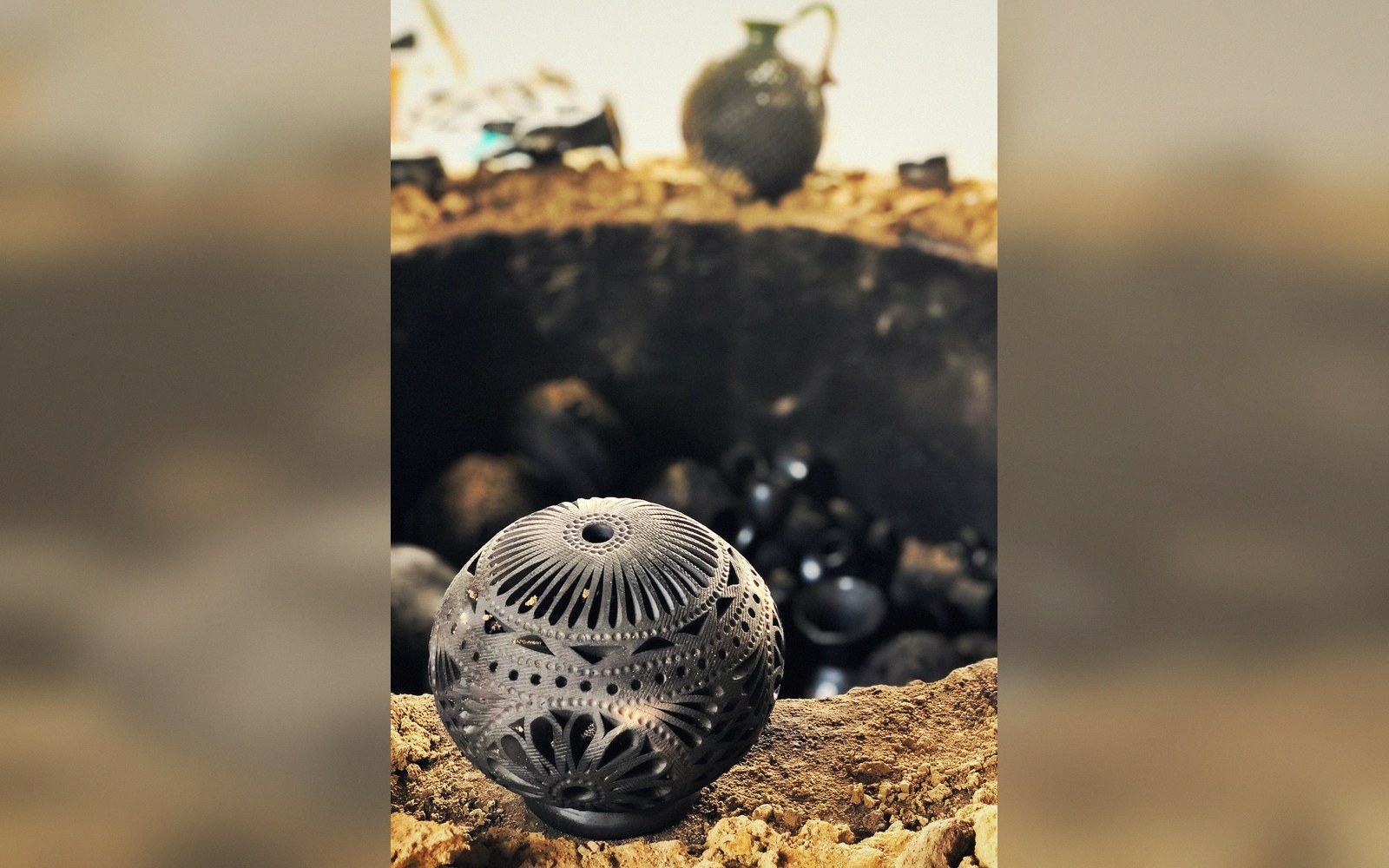
The black that comes from fire, not paint
San Bartolo Coyotepec, a village in the Central Valleys of Oaxaca, makes pottery that is uniformly, deeply black — not glazed, not painted, not stained after firing. The colour is structural: it belongs to the clay itself, produced by the way the pot is fired and the conditions in which it cools. The technique is old, but the form in which it is known today was substantially shaped in the mid-twentieth century by a single potter, Doña Rosa Real de Nieto, who refined the burnishing method and began throwing larger, more ambitious vessels. Her workshop drew attention and shaped what became the defining style of the region.
The clay used is a local grey-black earth, dug from deposits around Coyotepec. It is dense and relatively fine-grained, with a natural mineral content — including traces of iron and manganese — that responds to reduction firing by turning a consistent, lustrous black. Potters work it by hand rather than on a wheel in the European sense: the traditional method uses two clay discs, one inverted over the other, rotating on a petate mat or a wooden board.
The potter turns the lower disc with her foot or a helper's hand while shaping the walls from above. This technique is sometimes called a tournette — a slow turntable rather than a true wheel — and it produces walls of even thickness without centrifugal force.
Burnishing and the quartz stone
The colour and the characteristic sheen of barro negro depend on what happens both before the fire and at the end of it. Once a vessel has dried to the leather-hard stage — firm enough to handle, still damp enough to compress — a potter burnishes its entire outer surface with a small, smooth quartz stone. The stone is worked in tight overlapping strokes, compressing the clay particles and aligning the finest layer of surface material. This is slow, meditative work; a single large pot may take an hour of continuous burnishing. The result is a surface with a low metallic gloss, visible before firing and intensified by it.
No slip is applied, no engobe, no glaze. The shine is purely mechanical: compressed clay reflecting light. This matters because it means the finish can be damaged by washing with abrasive materials or soaking, which is why barro negro vessels — decorative pieces especially — are generally wiped clean rather than submerged.
This reduction phase turns the iron compounds in the clay from reddish ferric oxides to dark ferrous ones.
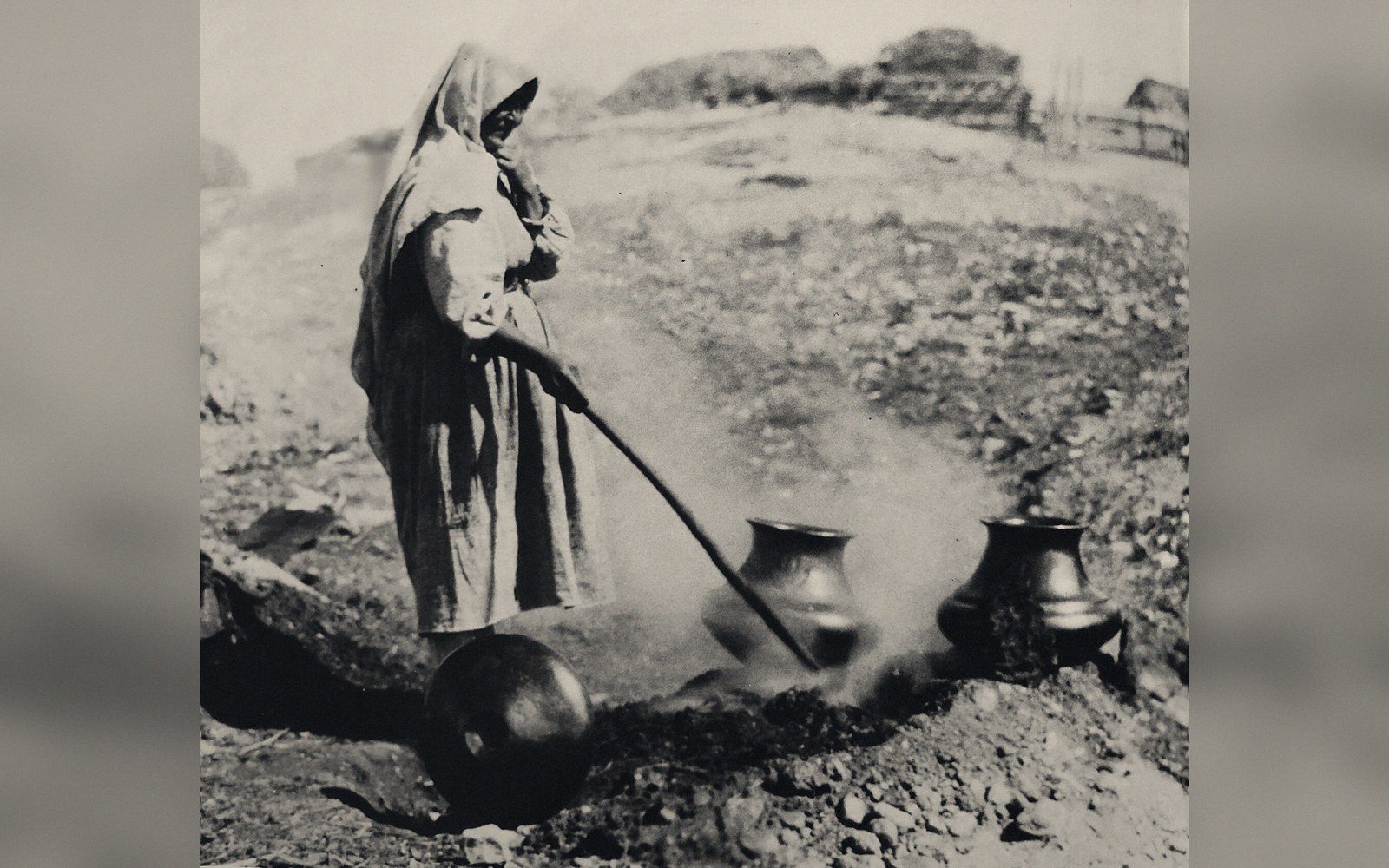
Firing is done in the open rather than in a sealed kiln. Pots are stacked together and covered with shards, bark and organic material — the open firing method common across Mesoamerica. What distinguishes barro negro is what happens at the end of the burn: the fire is smothered, cutting off oxygen.
Carbon monoxide and carbon dioxide flood the space around the pots, and the atmosphere drives carbon into the clay body. This reduction phase turns the iron compounds in the clay from reddish ferric oxides to dark ferrous ones. The entire vessel — surface and core — blackens, and the burnished exterior intensifies to the colour that makes the ware unmistakable.
Firing temperatures are moderate by industrial standards, which means the finished pots are not especially hard. Barro negro is porous and relatively fragile compared to stoneware; it rings with a gentle, matte tone rather than a sharp ceramic ping. Its cultural weight has never depended on durability.
Form and what the workshop makes
The repertoire includes functional pieces — water jugs, candelabras, incense burners — alongside purely decorative vessels, figures and the elaborate, skeletal figures associated with Day of the Dead markets. The larger decorative pieces, some standing well over half a metre, are built in sections and joined before the leather-hard stage; the joins are worked smooth with a damp cloth and then burnished continuously over the seam.
Coyotepec's market and many of its family workshops remain active, and the technique is taught within households across generations. The Museo Estatal de Arte Popular de Oaxaca holds a substantial collection tracing the form from utilitarian antecedents to contemporary work. San Bartolo Coyotepec itself is identified by the state of Oaxaca as a pueblo artesanal — a craft village — a designation that brings some institutional support without standardising what individual potters make.