Filigree
Drawn wire twisted and soldered into an open pattern, worked without a solid ground.
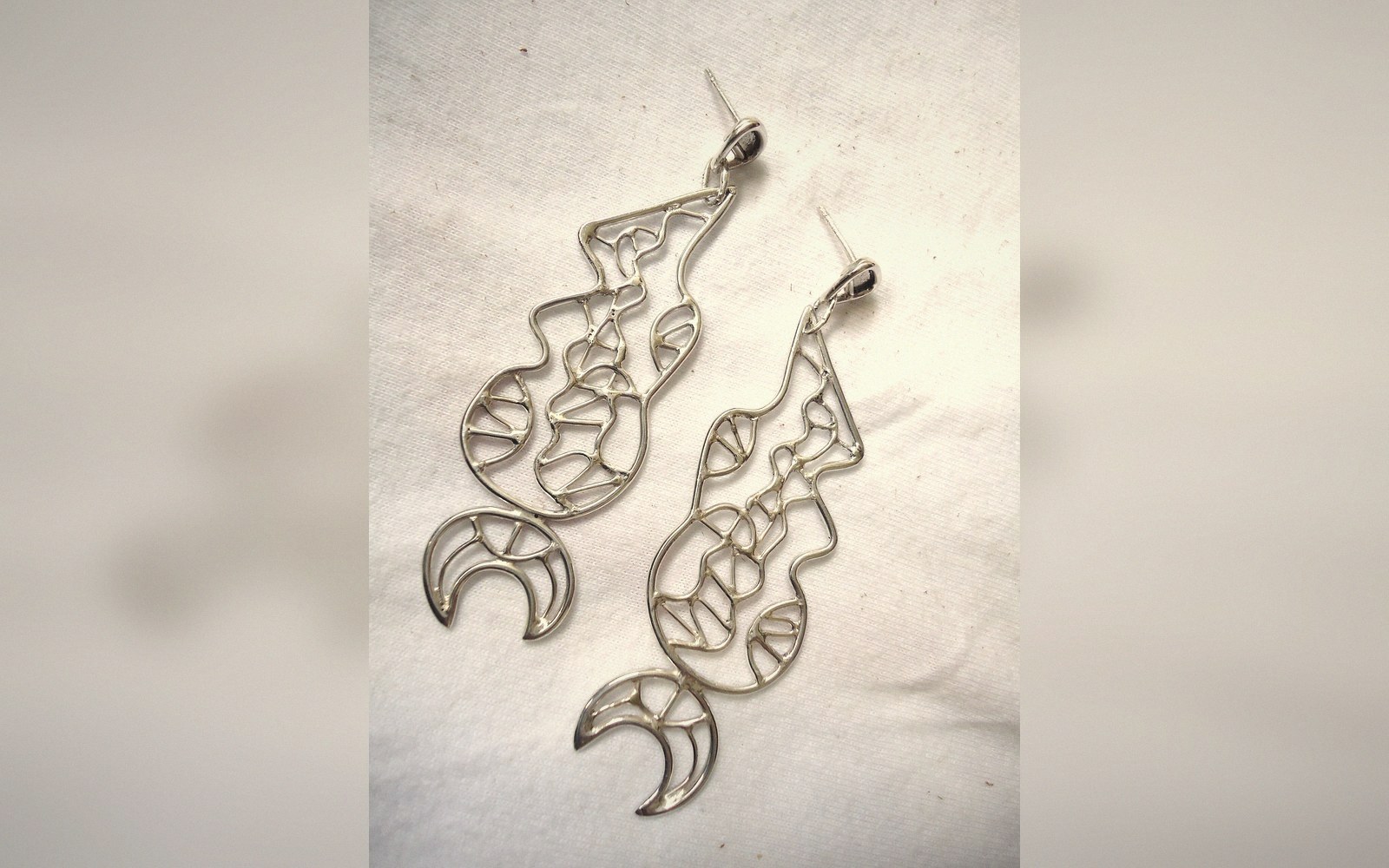
The wire that holds nothing but itself
Filigree is metalwork stripped to its minimum: wire drawn thin, coiled and twisted into curves, then soldered into a self-supporting open lattice. No cast body beneath it, no sheet metal backing. The pattern holds together because every joint is brazed and every loop pulls against its neighbor — architecture at the scale of a millimeter.
The technique arrived in Latin America through Spain and Portugal, which had themselves absorbed it from Moorish workshops where it had been practiced since the medieval period. It took root most deeply where colonial silver towns produced both the raw material and the skilled labor pool. Today the principal centers are Mompox in Colombia, where the craft is recognized by UNESCO; Caquiaviri in Bolivia; and several towns in the Oaxacan Mixtec region of Mexico, where gold filigree earrings — arracadas — remain a mark of formal dress for women.
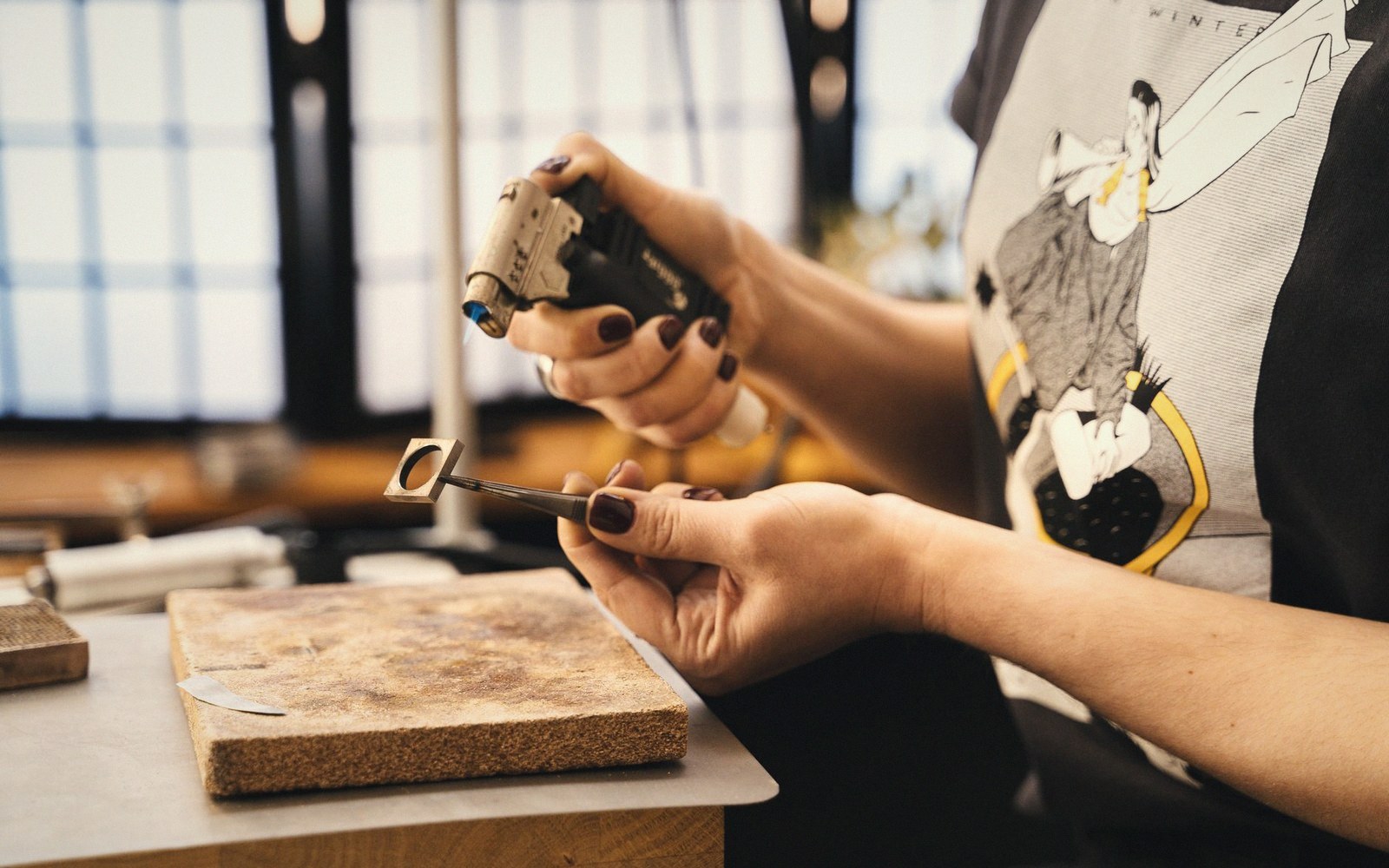
The work begins at the draw plate: a hardened steel sheet pierced with tapered holes of descending diameter. The smith hammers a silver or gold rod to a rough taper, feeds it through the largest hole, grips the emerging tip with draw tongs, and pulls. Repeated pulls through successively smaller holes compress and lengthen the metal until it reaches the required gauge — for fine filigree, as thin as a human hair. Two such wires are then twisted together on a hand spindle to form hilo retorcido, the twisted thread that gives filigree its characteristic braided edge.
From the twisted thread the maker forms units — scrolls, rosettes, teardrops — against a charcoal block or a soft backing that holds them momentarily in position. These units are assembled into the final form dry, checked for fit, painted with flux and powdered solder, then fired briefly over a small flame. Surface tension pulls the molten solder into each joint; the excess burns off. The piece is quenched, pickled in a mild acid to strip oxidation, and polished.
The critical discipline is heat control. Filigree has almost no mass to absorb excess energy, so an unfocused flame collapses the whole structure in seconds. Momposino smiths — working in the colonial-era workshops along the Río Magdalena — traditionally use a mouth-blown blowpipe to direct a precise jet of flame from a spirit lamp, a technique unchanged from the sixteenth century.
Because the wire does all the structural work, filigree is simultaneously the lightest and the most labor-intensive way to use precious metal. A pair of earrings might weigh under two grams and represent twelve hours of work.