The open firing
No kiln — pots stacked, covered and fired in the open, and what that does to the surface and the failure rate.
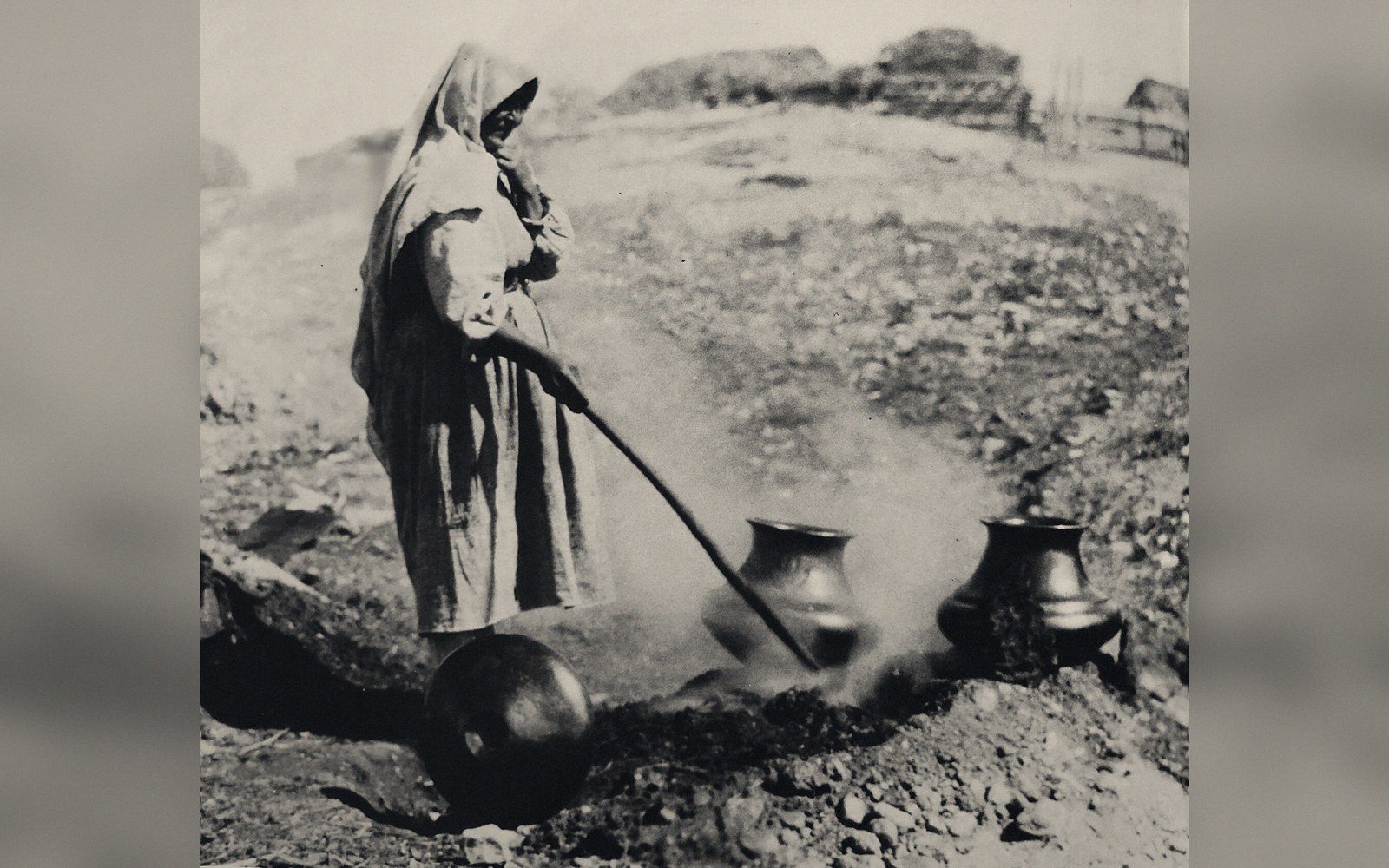
When the ground is the kiln
Open-pit firing is not a primitive step on the way to a kiln. It is a deliberate technique with its own logic, its own failure modes and its own characteristic surface — and across Mesoamerica and the Andes it remains the dominant method wherever electric or gas kilns have not arrived with a subsidy attached.
The setup is simple only in description. Dried pots are stacked on a bed of fuel — dry wood, bark, dung, or in the Oaxacan valley sometimes corncobs and wood together — and additional fuel is packed around and above them. In some traditions a shallow pit is dug; in others the stack rises above flat ground and is built up into a low mound.
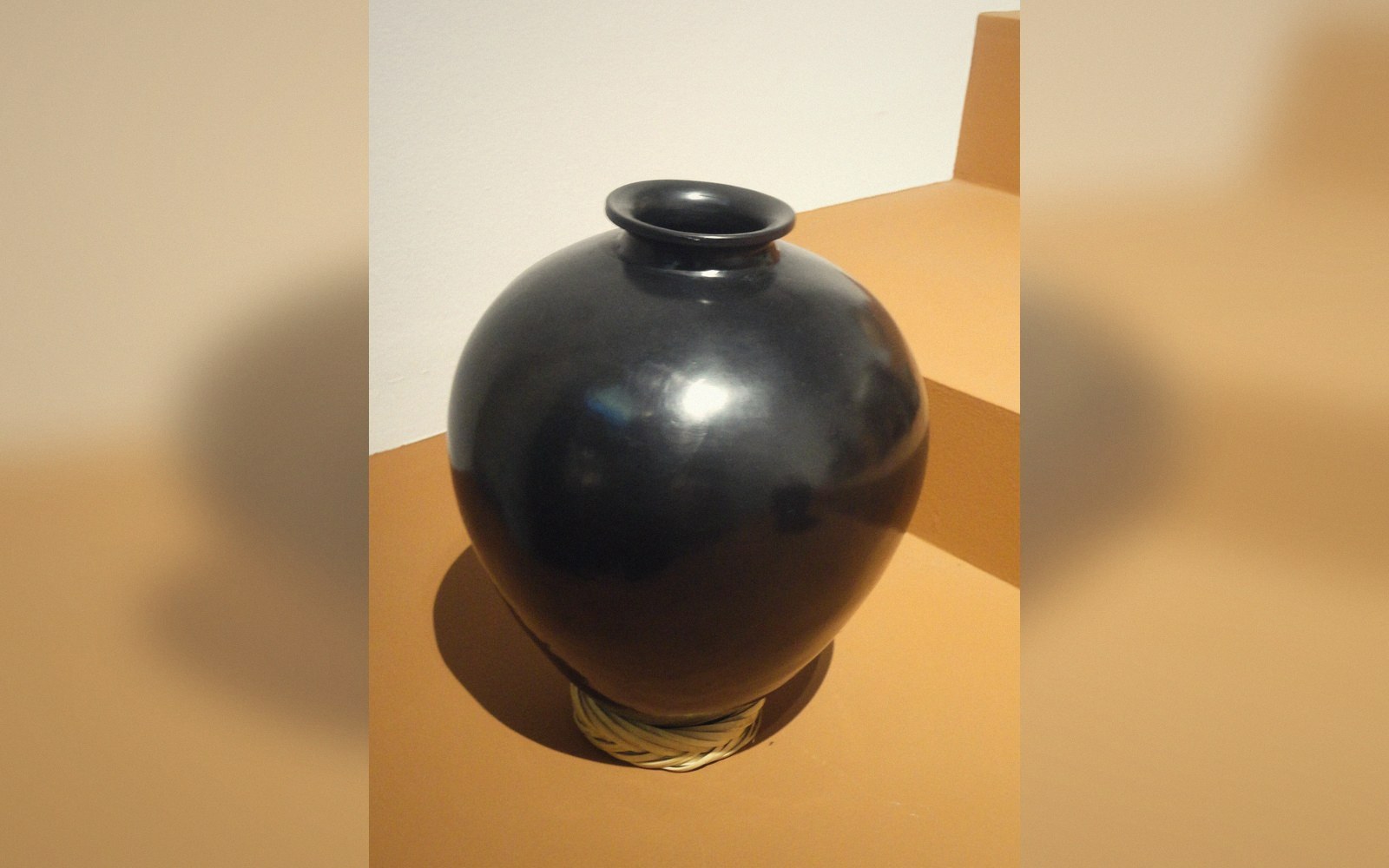
Either way, the mass of fuel determines how hot the fire will climb and how long it sustains that temperature. Experienced firers read the color of the flame and the behavior of smoke the way a kiln operator reads a pyrometer. There is no dial, but there is genuine control.
Temperatures rarely exceed around 800 °C — well below the 1,200–1,300 °C of stoneware kilns — which means the clay body remains porous. This is not a defect. Unglazed earthenware fired at these temperatures is exactly what a water-storage vessel needs to be: slight porosity allows slow evaporation through the wall, cooling the contents. The same physics makes the pot unsuitable for acidic or oily liquids over long use, which is why certain storage forms and certain cooking forms have stayed distinct for centuries.
The surface effects are irreproducible by any other method. Flashing — patches of orange, red, gray and near-black where flame, smoke and oxygen shifted unevenly — is not accidental decoration but the direct record of combustion. In barro negro production around San Bartolo Coyotepec, the buried smothering phase at the end of the fire is what drives carbon into the clay and turns the whole vessel black. The burnishing that precedes firing catches that carbon selectively, making the sheen.
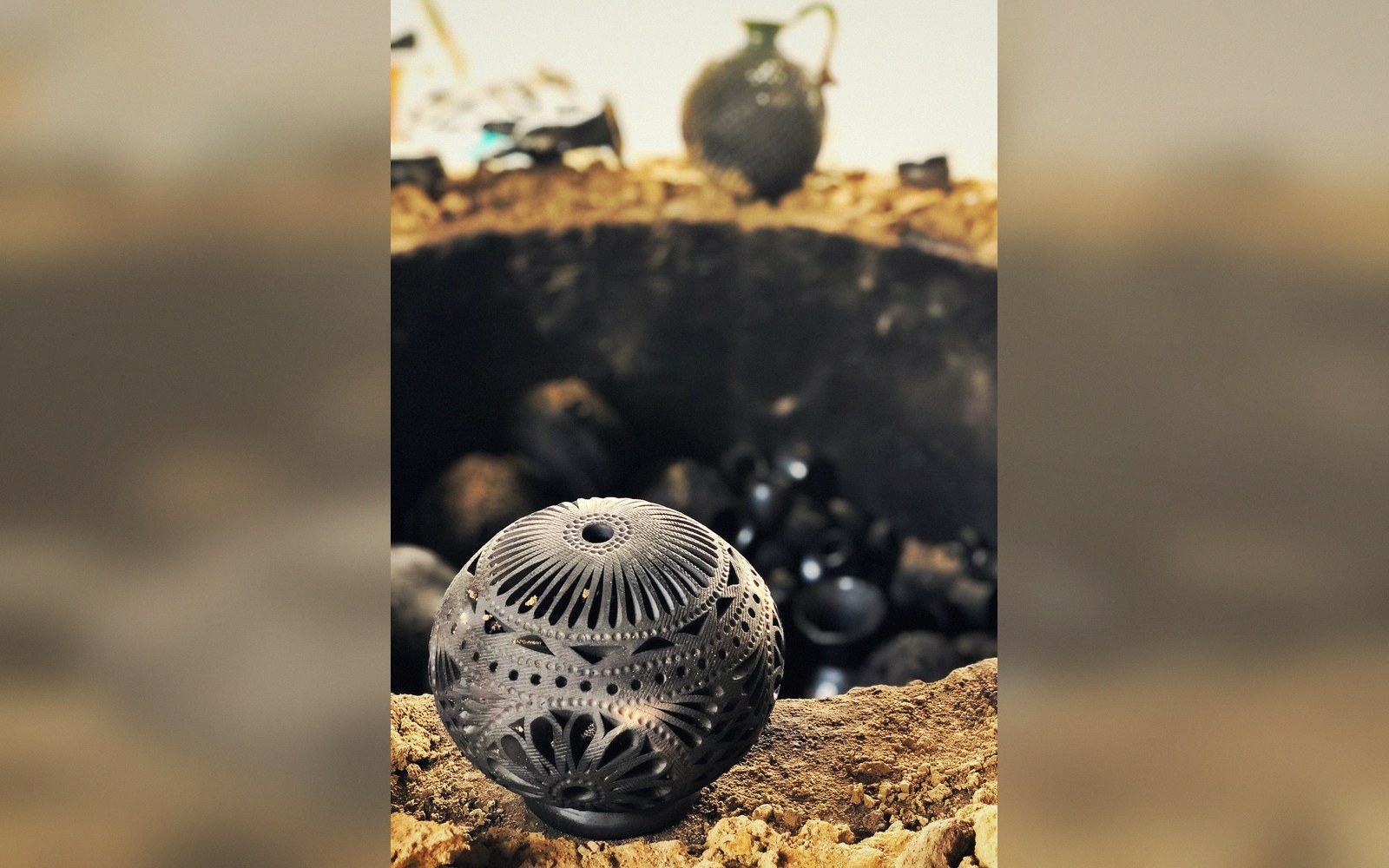
Failure rates are real. Thermal shock during heat-up or cool-down cracks pots that were not fully dry, were unevenly thick, or were disturbed while still hot. In most open-firing traditions, five to twenty percent of a load does not survive. Makers account for this in how many pieces they stack and how they price the ones that come out whole. The breakage is not waste — sherds go back under the next firing as a base layer, leveling the ground and moderating heat from below.