Silver and the bench
Colonial silver was worked in quantity for three centuries. The bench tools and the techniques barely changed.
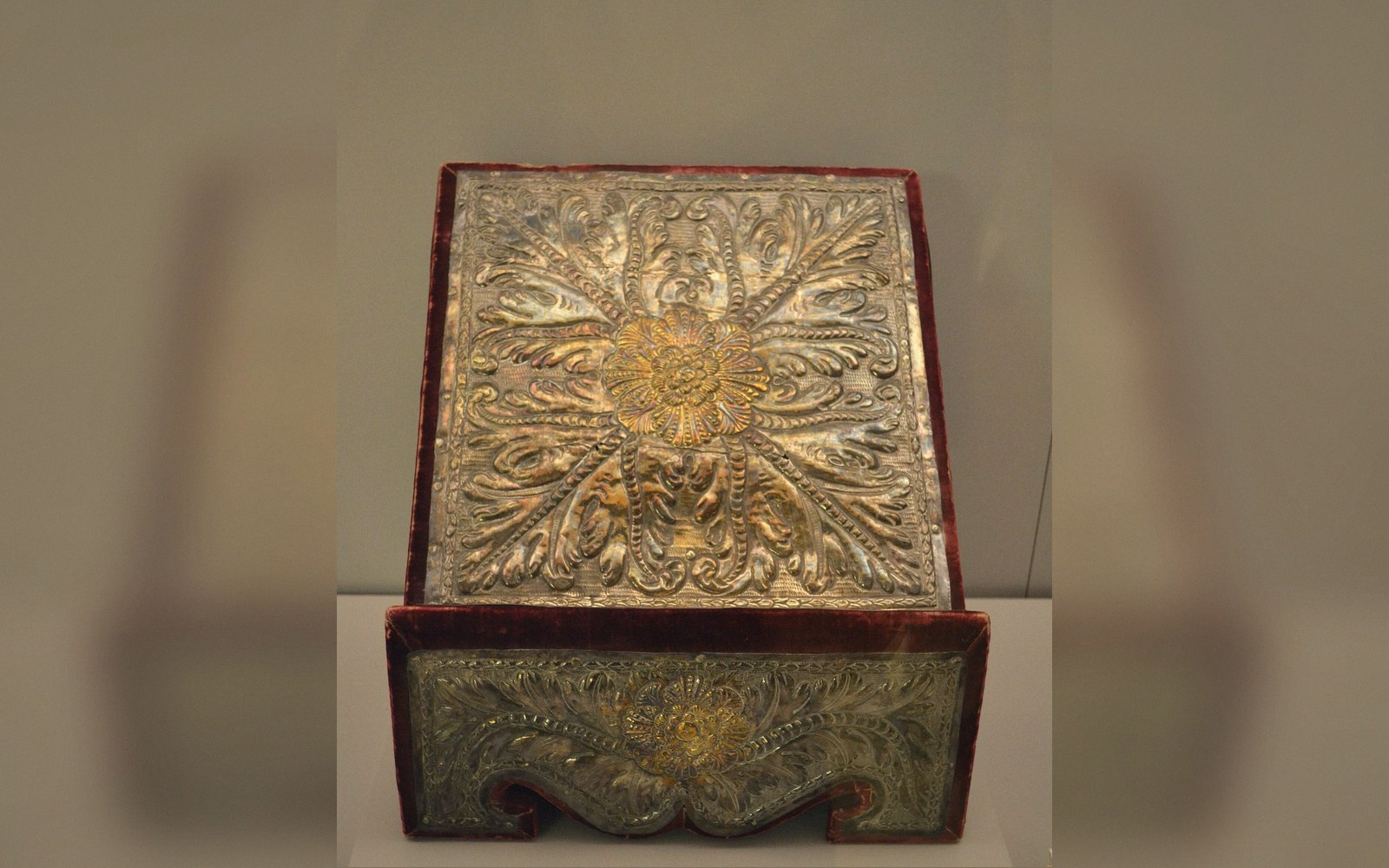
The long continuity of colonial silverwork
Three centuries of colonial production left Spanish America with a silverworking tradition of extraordinary depth — not because the metal was abundant (though it was), but because the bench techniques used to shape it proved so well-adapted to the material that they have barely shifted since. The hammer, the stake, the burnisher and the chasing tool: these are still the instruments of a platero working in Taxco, Catamarca or Mompox today.
The colonial workshops — talleres , as silversmiths called them — were organized hierarchically. A master platero held the license, registered his mark with the guild, and answered to the assay office that tested fineness. Apprentices and journeymen did the preparatory and repetitive work: drawing wire, planishing sheet, polishing. The guild system collapsed across most of Spanish America in the early nineteenth century, but the bench hierarchy it created survived informally and is still legible in how a Mompox workshop divides its labour today.
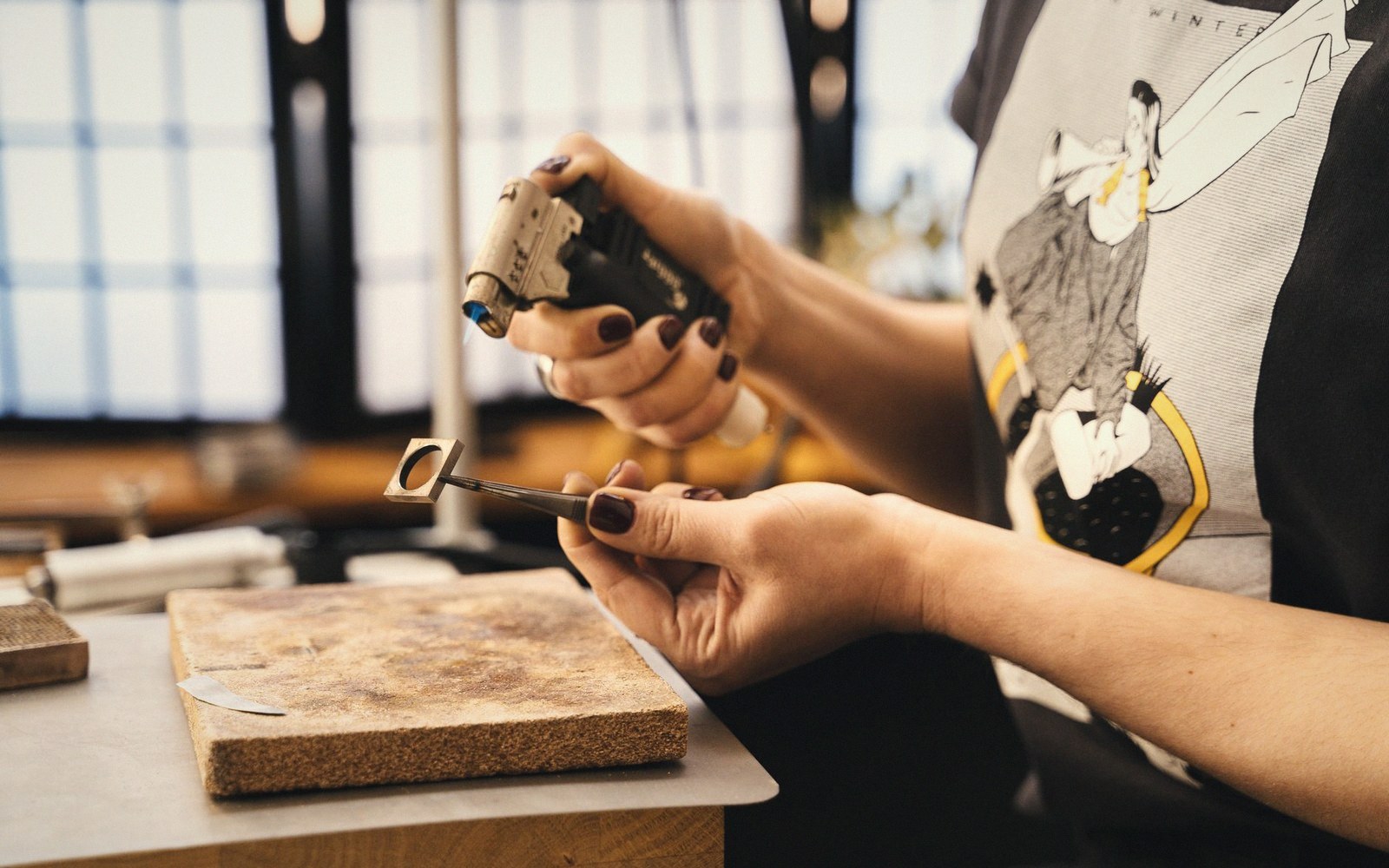
What happens on the bench
Silver arrives at the bench either as cast ingot or as sheet, and the decision between the two paths is made early. Cast forms — figurines, ecclesiastical mounts, heavy bases — come from lost-wax or open-mold casting, the metal poured and then chased cold.
Sheet work begins with the ingot annealed and then hammered repeatedly over a stake or anvil, the smith rotating the disc or strip by small increments with each blow to keep the metal moving evenly. This process, called repujado (repoussé) when the hammer drives from behind the sheet to raise a form, is the foundation of colonial vessel-making: the chalice, the ciborium, the salvilla (footed tray), the mate cup.
Annealing is not optional. Silver work-hardens quickly — hammer it past its limit without reheating and it cracks. Colonial smiths heated to a dull red and quenched in water or left to air-cool, depending on the form. That cycle of hammer-anneal-hammer could repeat dozens of times in a single piece. The tools themselves are simple: a ball-peen for doming, a planishing hammer for smoothing, a rawhide or boxwood mallet where a softer blow is needed. Stakes are iron rods and mandrels of varying profile, held in a bench vise or driven into a log.
The mark is the only document the object carries, and a platero worth the name still takes it seriously.
Decoration comes by two routes. Cincelado — chasing — uses a blunt-faced punch and hammer to push the surface from the front, moving metal without removing it. Engraving, by contrast, cuts with a buril (graver) and removes a fine curl of metal. Colonial altar silver often combines both: the raised form from repoussé, the fine linear detail from engraving after the fact. Gilding, where it appears, was traditionally fire-gilded — an amalgam of gold and mercury painted onto the surface and the mercury driven off by heat, a process now largely abandoned for health reasons and replaced with electrolytic gilding.
Taxco, in the Mexican state of Guerrero, became the centre of a twentieth-century revival built on these same techniques, its production shaped in part by the influence of the American designer William Spratling, who arrived in the late 1920s and worked with local smiths to adapt colonial bench methods to a modernist vocabulary.
But the techniques Spratling documented and promoted were not his invention: they had been practiced continuously in the town's tradition since the colonial period. In Colombia, the city of Mompox on the Magdalena River maintains a particularly well-documented lineage of fine filigree work — wire drawn, twisted into scrolls and soldered into open panels — a tradition distinct from the heavier repoussé work of the Andean workshops. (That technique is covered in the guide to filigree.)
The mark — the punzón — remains the proof of maker and standard. Colonial pieces carried the assayer's mark, the city mark and the maker's mark, struck cold into an unobtrusive surface. These marks, still legible on surviving pieces, are what allow scholars to trace a chalice to a specific taller in eighteenth-century Lima or Potosí. The bench itself generates no paper. The mark is the only document the object carries, and a platero worth the name still takes it seriously.