Cacao before chocolate
Fermented, dried, roasted and ground — and drunk bitter, foamed and spiced long before any of it was sweetened.
The older drink, made the older way
Cacao (Theobroma cacao) was processed and consumed for well over three millennia before sugar entered the picture. The sweetened bar is a nineteenth-century European invention; what came before it was a fermented beverage, cold or warm, spiced with chili and ground with maize, and consumed by people who would not have recognised the word "chocolate" in the sense we use it now.

From pod to cup: the full sequence
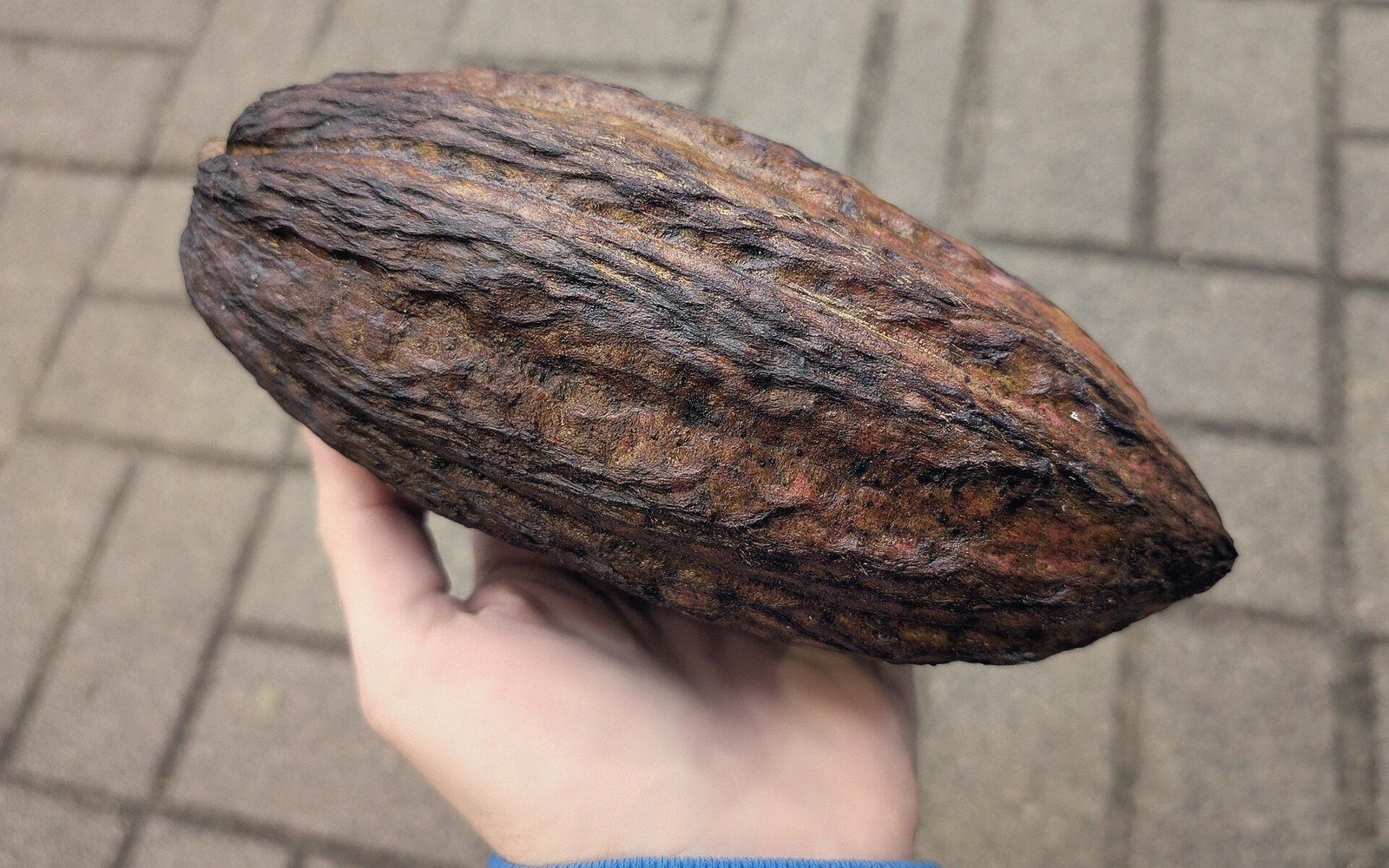
The work begins when the pod is split. Inside is a mass of seeds — cacao beans — surrounded by a white, mucilaginous pulp that is sweet and faintly acidic. That pulp is not discarded; it drives fermentation. Split pods are heaped in wooden boxes or wrapped in banana leaves and left for five to seven days. During this time the pulp liquefies and drains, temperatures inside the pile rise sharply, and the bean itself undergoes biochemical changes that are the actual foundation of flavour. Unfermented beans produce a flat, intensely bitter drink with none of the layered quality the finished preparation requires. Fermentation is not optional.
After fermentation, the beans are spread to dry, traditionally on wooden platforms or tamped-earth surfaces under direct sun. The drying period runs one to two weeks, during which residual acids disperse and the bean's moisture content drops to around seven percent — low enough to prevent mould during storage and transport. The Olmec, Maya and later Mexica (Aztec) civilisations all traded in dried fermented beans, and Mexica tribute records enumerate cacao by the load in quantities that make clear it was a commodity of real value, not a luxury curiosity.
Roasting comes next. A shallow clay comal (griddle) over a wood fire is the classic tool; beans are moved constantly with a wooden paddle and pulled when the shell cracks and the interior aroma shifts from raw and slightly vinegary to something deeper. Overroasting destroys the volatiles that give the beverage its complexity, so the roaster is reading colour, sound and smell simultaneously. Once cool, the thin papery shell is cracked off by hand or between grinding stones, leaving the nib — the cacao cotyledon — which contains fat and a dense network of flavour precursors built during fermentation.
What the drink was not, in any pre-contact version, is sweet in the way the European-derived form became.
Grinding is done on a metate, a volcanic stone slab. The nibs are ground progressively, with heat generated by friction helping to liquefy the fat — cacao butter — that constitutes roughly half the bean's mass. The result is a thick, dark paste called pasta de cacao or masa de cacao. At this stage the paste can be shaped into tablets or balls and dried for storage. These were the unit of preparation carried by travellers and traders for centuries, and their existence answers a question that tends to puzzle outsiders: cacao does not require refrigeration at any point in its traditional processing.
The drink itself
The final preparation varies by region and period, but the core method documented by early colonial sources from Mesoamerica involves dissolving the paste in water and generating foam. Foam was not decoration; it was considered the finest part of the drink. The technique most often described involves pouring the liquid repeatedly between two vessels from a height, building an airy head.
Later, a wooden molinillo (a carved stirring stick rotated between the palms) served the same purpose. Additions included ground dried chili, vanilla, achiote (annatto, which gives a reddish colour), and ground toasted maize, which thickened the liquid and softened its bitterness. Honey appears in some preparations; it was native to Mesoamerica via stingless bees of the Melipona genus, though it was used in quantity less often than later European accounts supposed.
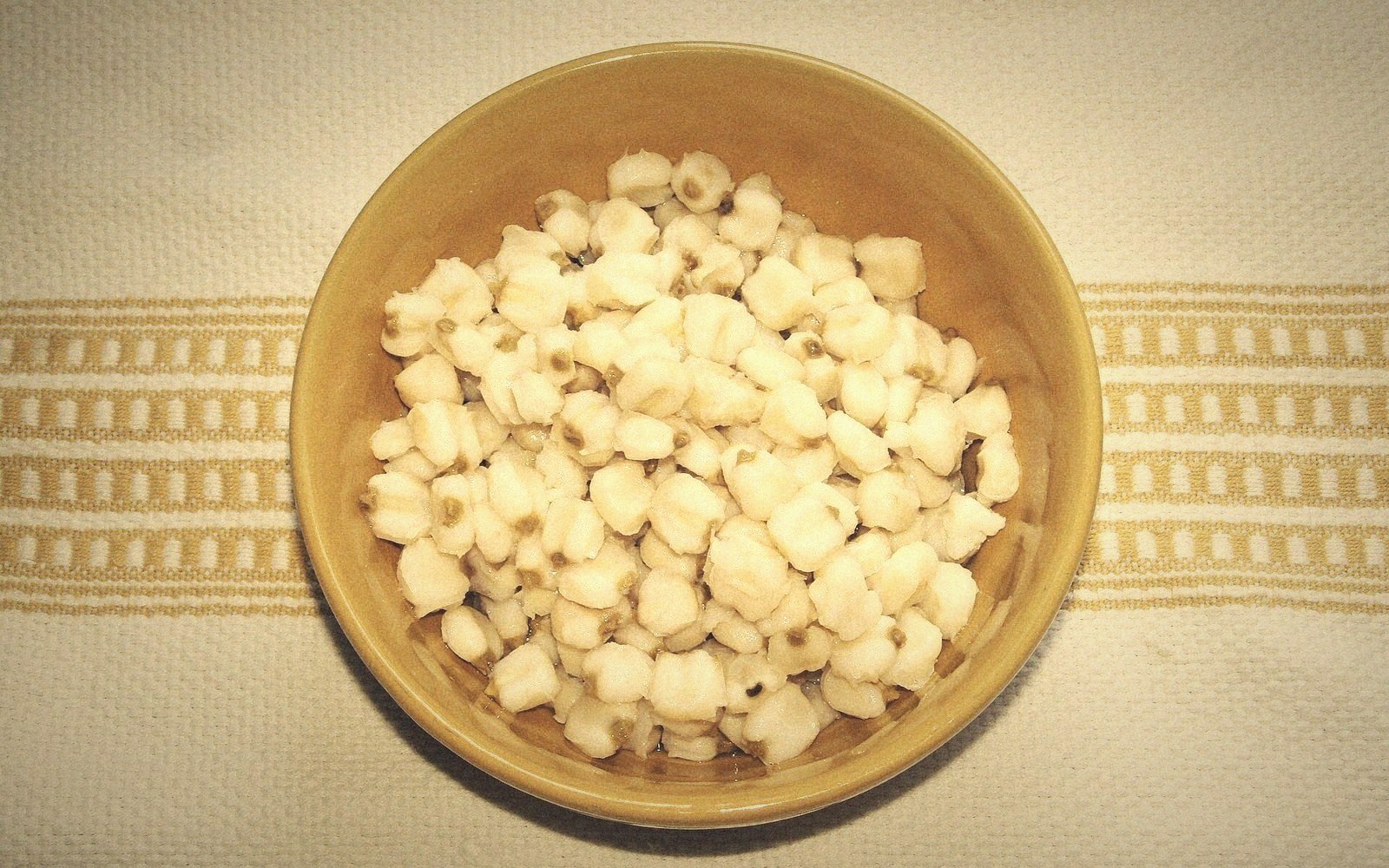
The drink was served warm in many Maya contexts and typically cold or at room temperature in Mexica ones, according to the sources, though both traditions overlapped across centuries and geography. What the drink was not, in any pre-contact version, is sweet in the way the European-derived form became. The bitterness was a feature, managed by proportion and spicing rather than masked by sugar. The flavour logic was entirely different, and a cup made to the older method remains a different thing entirely from anything on a confectioner's shelf.