Nixtamal
Maize cooked in an alkaline solution before grinding. It loosens the hull, changes the smell, makes the dough hold together and unlocks nutrients that raw maize will not give up. Nearly every maize kitchen in the region runs through this one step.
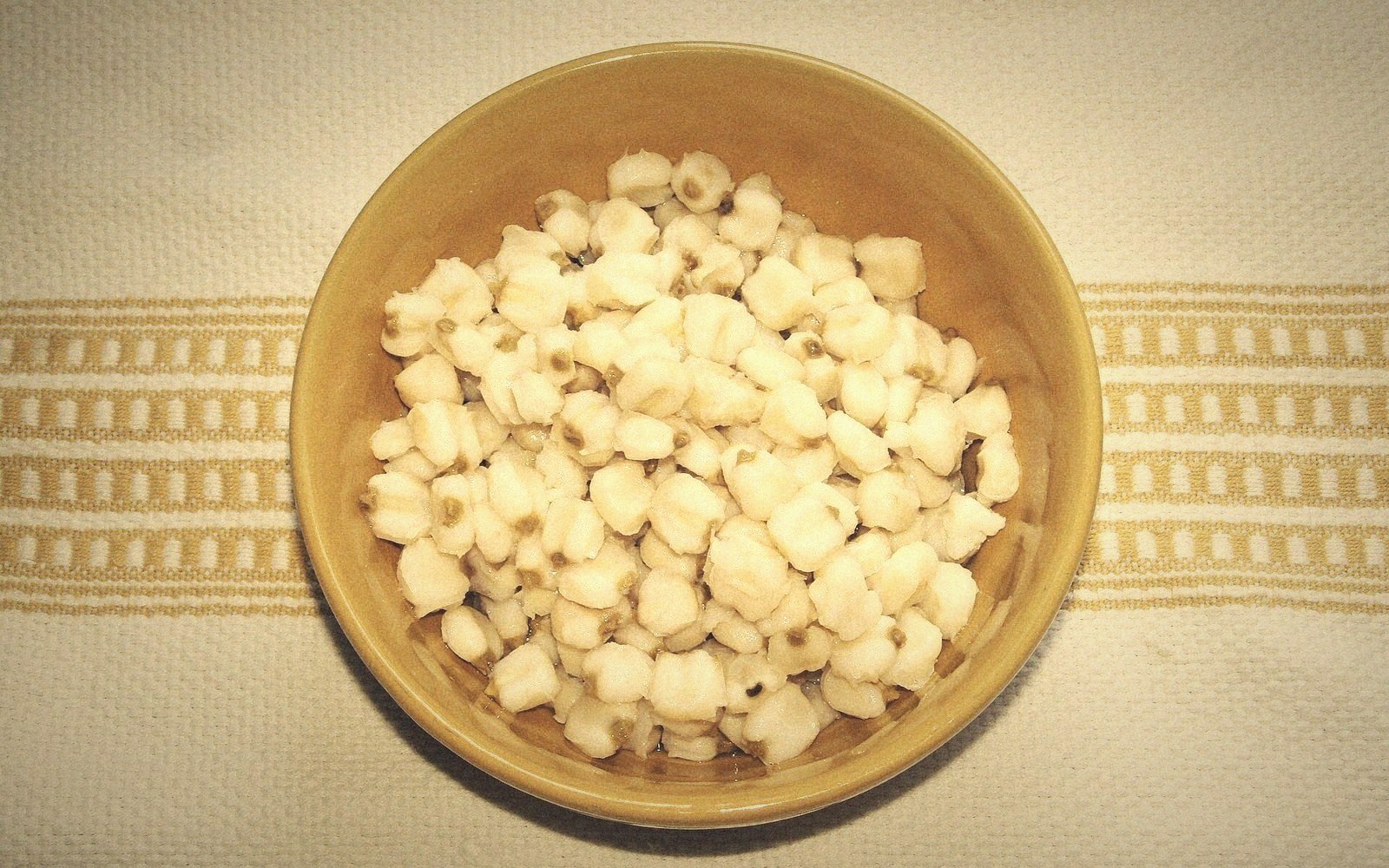
The alkaline step that makes maize into food
Maize eaten straight from the cob is perfectly nutritious for the short term. Ground raw and baked, it will fill a stomach. But populations that ate maize as a primary grain without first treating it in an alkaline solution tended, over generations, to develop pellagra — the niacin-deficiency disease that ravaged parts of the southern United States and southern Europe after maize spread there from the Americas without the processing knowledge that accompanied it. Mesoamerica never had that problem. The technique called nixtamalización, practiced continuously for at least three thousand years, is the reason.
The word comes from Nahuatl: nextli (ash) and tamalli (the unformed dough). Nixtamal is the treated grain itself — the maize after the alkaline bath, before or after grinding, that intermediate state that is the foundation of tortillas, tamales, tlayudas, memelas, gorditas and dozens of other forms across Mexico, Guatemala, Belize, Honduras and beyond.
Industrial masa harina, the shelf-stable flour sold under brands like Maseca, takes a different route.
What the process actually does
Dried maize kernels are hard, encased in a hull called the pericarp, and chemically bound in ways that limit what the human body can extract. The alkaline solution — almost always slaked lime (cal, calcium hydroxide) dissolved in water, though wood ash lye is the older and still-used alternative in some communities — attacks all three problems at once.
Heat the water first, or bring the maize and water up together, then add the cal. The pH of the cooking liquid rises sharply. At temperature, the pericarp softens and begins to slip. Inside the kernel, the niacin (vitamin B3), which is present in maize but locked into a bound form called niacytin, is converted into free niacin the body can absorb. Amino acids become more bioavailable. The starch structure changes, partially gelatinizing in a way that will later help masa — the ground dough — bind and hold its shape without any additional binder.

The grain is not cooked through. The cook brings the water to a simmer, holds it there between thirty minutes and two hours depending on the maize variety and what the masa will eventually become, then removes the pot from heat and lets the grain steep. This rest period — often overnight — matters as much as the cooking.
It is during the steep that the pericarp fully loosens and the chemical conversion deepens. In the morning, the grain is drained and rinsed: the milky grey-green rinse water, called nejayote, is itself mildly alkaline and has its own uses in some regional kitchens, particularly in Oaxaca, where it is used to set colour in certain preparations and, historically, as a hair treatment.
After rinsing, the grain is rubbed: hands or, at scale, a mechanical process removes the loosened pericarp. What remains is the nixtamalized kernel — swollen, tender at the surface, faintly lime-scented, slightly yellower if the original maize was white (the alkaline process shifts colour subtly), and ready to grind.
From grain to masa: the grind
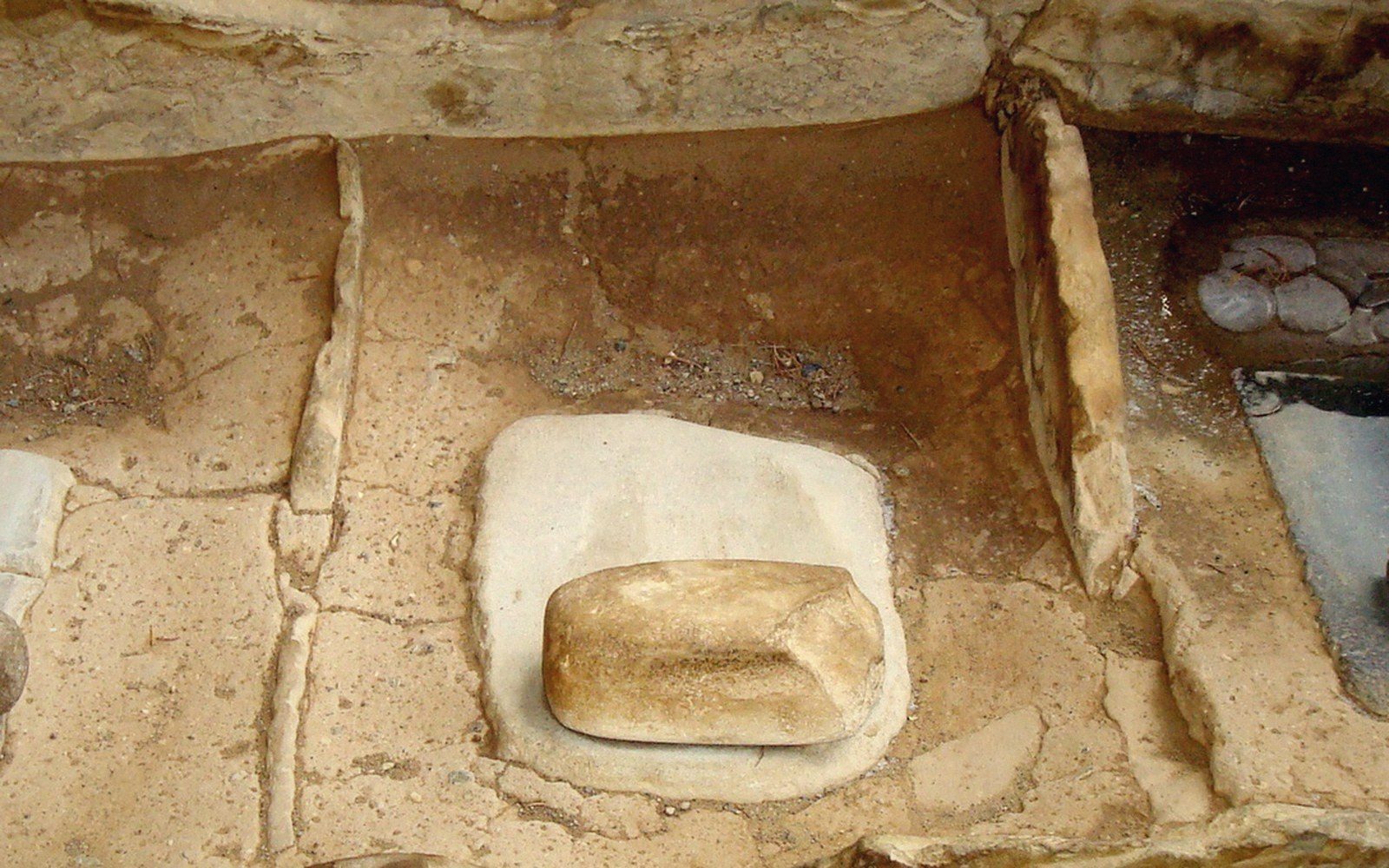
The traditional grinding surface is the metate, a volcanic stone slab sloped toward the front, worked with a cylindrical hand stone called the mano or metlapil. Wet nixtamal grinds far more easily than dry raw maize; the moisture is part of the technique. The cook adds small amounts of water as grinding proceeds, working the dough back over itself, thinning or thickening by feel. A fine masa for tortillas requires multiple passes; a coarser grind is acceptable for tamale dough, which is enriched with lard and beaten separately.
From the mid-twentieth century, the mechanical molino — a neighborhood mill powered by an electric motor with two stone discs — took over most of the grinding work in towns and cities. A cook brings her nixtamalized grain in a bucket; it comes back as masa within minutes. The molino did not displace nixtamalization itself; it only displaced the metate. The alkaline step remained exactly as it was.
Industrial masa harina, the shelf-stable flour sold under brands like Maseca, takes a different route. Manufacturers nixtamalize at scale, dry and mill the treated grain, and sell the powder for reconstitution with water. The convenience is real; the chemical transformation — the nixtamal step — has still occurred, because without it the flour would not hydrate correctly or hold together as dough. Masa harina is dried nixtamal, not dried raw maize.
Regional variation within the method
The core alkaline transformation is consistent, but the grain chosen, the concentration of lime, the cooking time, the grind texture and what the masa becomes next all vary substantially by region and by intended use.
In the highlands of Oaxaca and Chiapas, blue and purple maize varieties are nixtamalized for tortillas whose flavour is distinctly earthier and slightly nuttier than white-maize versions. The lime concentration in some highland communities is lower, and the steep is longer. In parts of Guatemala, particularly among Q'eqchi' and Mam communities, wood ash lye remains in everyday use alongside or instead of cal; the ash-treated masa has a slightly different texture and a more mineral note in the finished tortilla.
Tamale masa is typically nixtamalized from a starchier variety, ground coarser and mixed with rendered lard and broth beaten in until the dough floats a small pellet in water — the traditional test for sufficient aeration. Atole, the thick maize drink, is made from masa thinned with water and cooked until it thickens; pozol, the fermented version consumed across the Gulf coast and into Central America, starts from the same nixtamalized base left to ferment, sometimes for days, into a sour, cooling drink consumed with water in the field.
The physical object most associated with this process — the tortilla — moves through its final stages quickly: a ball of masa pressed flat and cooked on a dry clay or metal comal for less than two minutes per side. The entire span from dried kernel to finished tortilla, if the nixtamalization was done the night before, is under half an hour of active work the following morning. The overnight chemistry is what makes that possible.
None of this is incidental technique. Nixtamalization is the hinge on which Mesoamerican grain culture turns. Remove it, and maize remains a calorie that does not fully nourish. Apply it, and the same grain supports populations for millennia, in country after country, under hundreds of different names and forms, without ever needing to be anything other than maize treated in lime water and ground while still wet.