The metate
A stone grinding slab and its hand stone, cut from volcanic rock and roughened again as it wears smooth.
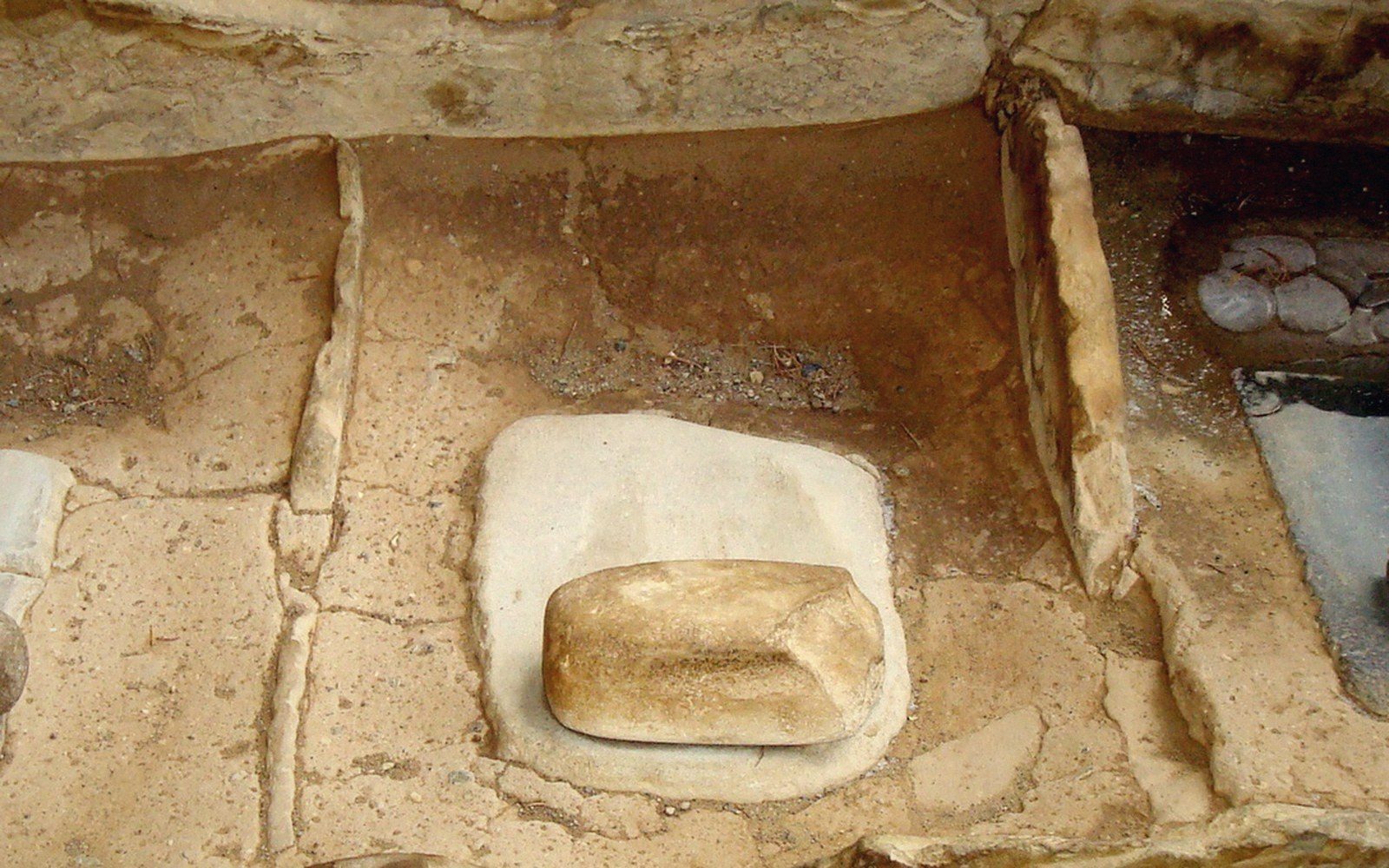
*Two stones that have not changed in eight thousand years of daily use.*
A Tool That Wears Itself In
The metate is a rectangular grinding slab, slightly concave along its long axis, supported on three short legs cut as part of the same block. It comes paired with the mano — a cylindrical or loaf-shaped hand stone that rides back and forth across the surface. Both are cut from vesicular basalt, the porous volcanic rock that makes up much of the highland terrain from central Mexico through Guatemala and into the Andes. The porosity is the point: grit catches grain.
Quarries dedicated to metates have operated in the same places for millennia. The Texcoco basin in Mexico and the volcanic ranges around Antigua, Guatemala, are still sources. Cutters split the raw block with iron wedges — and before iron, with bone and antler — and rough the working surface with a pointed pick to open the vesicles and expose fresh abrasive.
That roughening is called picado in Spanish, and it is a recurring task rather than a one-time preparation. A metate used daily for nixtamal or dried maize goes smooth in weeks, and a smooth surface generates heat without traction and produces paste instead of flour. The household periodically re-picks both stones to restore the bite.
In use, the cook kneels behind the high end and leans forward, pressing the mano away from the body with her full weight. Material is added at the high end and collected at the low end into a bowl or onto a cloth. Multiple passes at different pressures produce coarser or finer grinds, so the same tool serves masa for tortillas, paste for tamale dough, ground cacao, dried chiles and wet salsas. The metate does not specialize. Its geometry means that what it handles is dictated entirely by the grain of the stone and the skill of the hand.
The tool's survival into households that also own electric grinders is not nostalgia. Bakers and cooks consistently report that stone grinding generates a texture no blade or plate can replicate.