The earth oven
Hot stones, a covered pit and several hours. The same method under a dozen names.
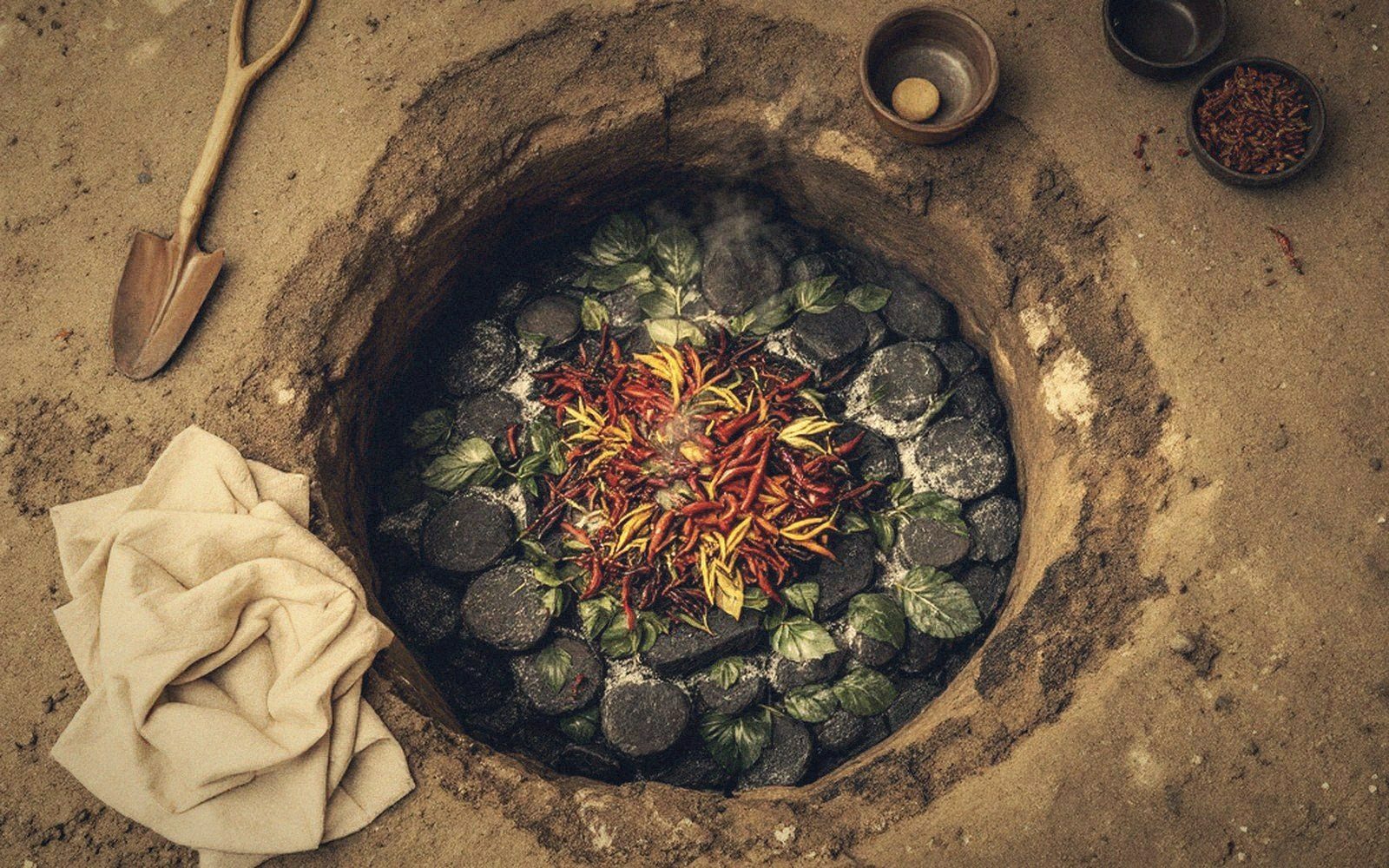
Dig a pit, heat stones until they crack the air, lower the food and seal it with earth. The method appears under a dozen names across Latin America and the Andes, but the physics never changes.
One technique, many names
The pachamanca of the Peruvian highlands, the pib of the Yucatán peninsula, the curanto of southern Chile and the huatia of the altiplano are all the same machine: a pit lined or loaded with stones heated in a wood fire until they hold intense, even heat, food packed against them, the whole thing sealed and left to cook in its own steam.
The stones are chosen with care, not grabbed at random. Volcanic rock — andesite in the Andes, basalt where it is available — holds heat long and does not fracture the way river-smoothed stone can. A stone that shatters in the fire is a danger and a waste; experienced cooks in the Andean highlands test their stones over years of use, keeping the ones that survive and discarding the ones that do not.
In the Yucatán, the pib is more often dug into the flat limestone earth; the stones are still fired first, dropped into the pit, and the food — classically a large tamale stuffed with turkey and recado negro — is lowered on top before the pit is covered with a sheet of metal or flat stones and then soil.
A pachamanca is loaded in sequence: first the meats nearest the hottest stones, then the root vegetables, then softer things like broad beans and fresh cheese toward the top, wrapped in aromatic leaves. The whole parcel can take two to three hours buried to reach the temperature needed to break down the collagen in a tough cut or cook a thick potato through to its center.
The huatia, smaller and more improvisational, is built above ground from clods of earth stacked into a dome over a fire, then collapsed inward onto potatoes once the clay walls have heated through — the burning dome becomes the oven itself.
What these techniques share is patience. There is no dial to turn. The cook prepares everything before the pit is sealed because nothing can be checked or corrected once the earth goes on.