Indigo and the vat
Indigo will not dissolve in water. The dye works only through a fermented vat, and the cloth comes out green and turns blue in the air.
A dye that only works when it's broken down
Indigo does not dissolve in water. This fact is the whole problem and the whole point: unlike most natural dyes, which simply steep into fiber from a hot bath, indigo requires a transformation before it can dye anything at all. The pigment — whether extracted from Indigofera tinctoria, from the Central American shrub Indigofera guatemalensis, or from woad — is insoluble in its natural state. To make it work, you have to chemically reduce it. The traditional answer to that problem is fermentation.
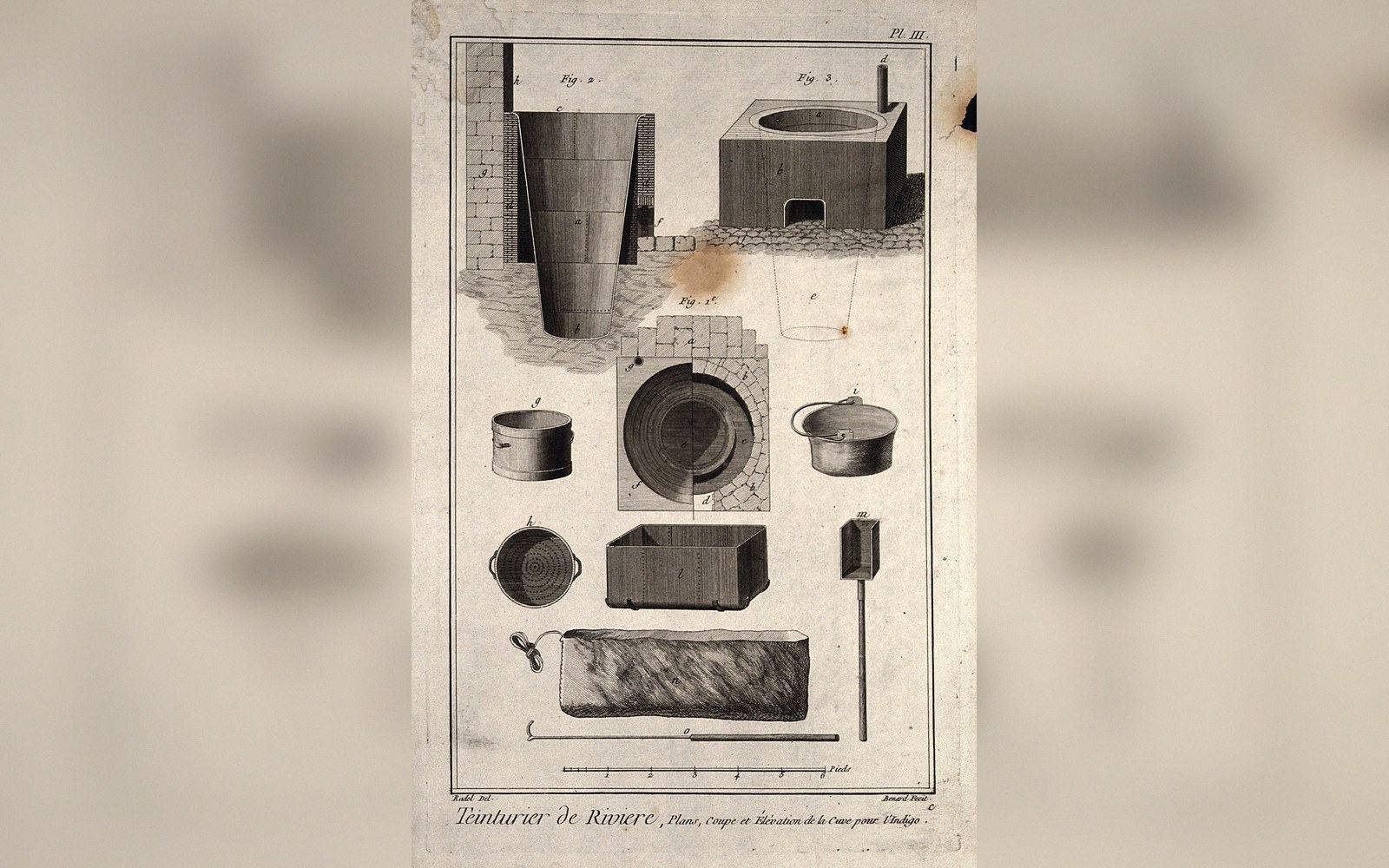
The vat is built, not mixed. In the textile regions of Oaxaca, Guatemala, and the Andean foothills where indigo cultivation has deep roots, a working vat typically begins with dried and powdered indigo paste, an alkali — traditionally wood ash lye, slaked lime, or the ash of burned plant matter — and a fermenting agent.
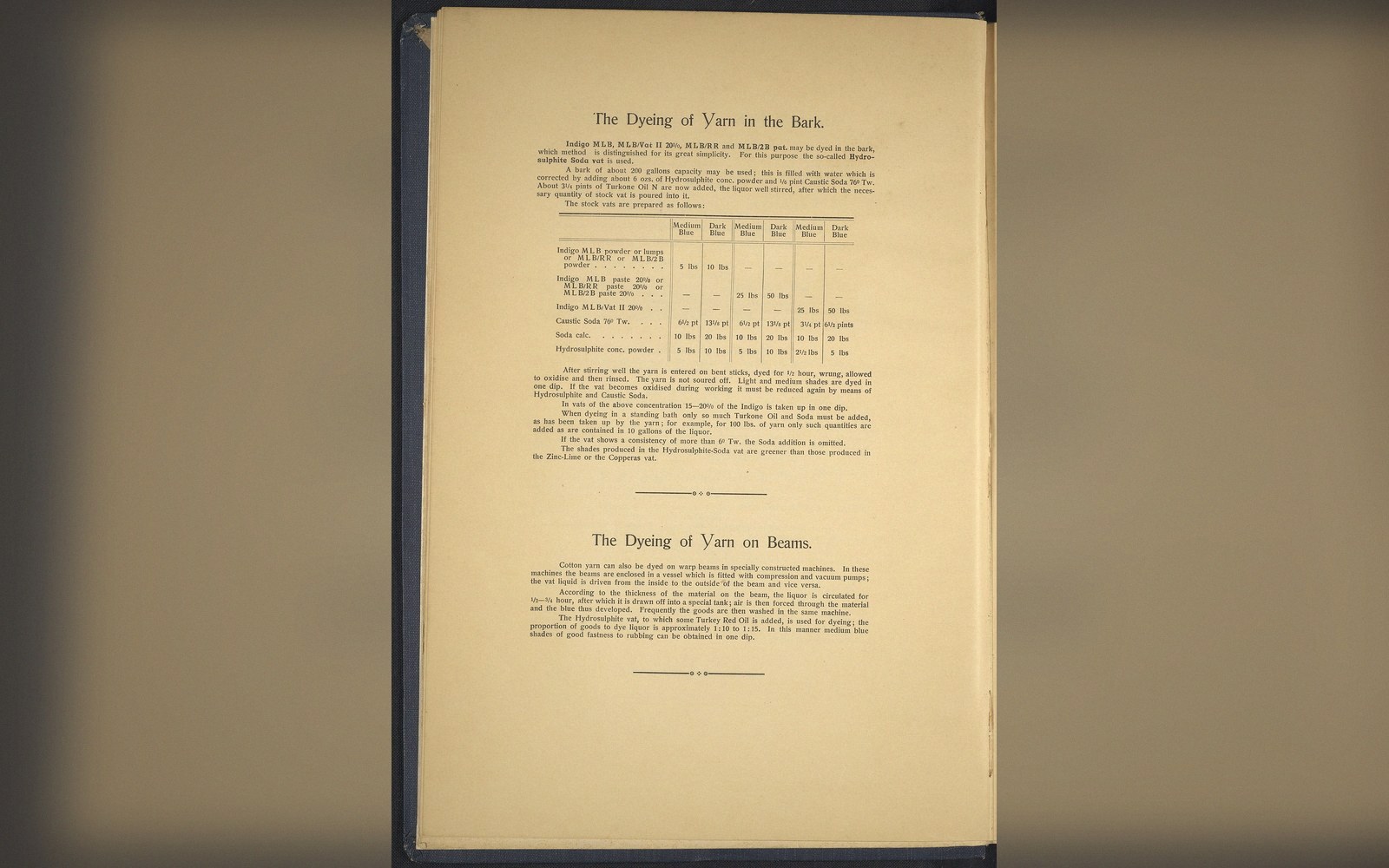
That fermenting agent has varied by region and century: ripe plantain, wheat bran, molasses, date fruit, stale bread. The point is to feed anaerobic bacteria that will consume the dissolved oxygen in the vat, driving it into what chemists call a reduced, or "leuco," state. In that reduced state, the indigo molecule — now leuco-indigo — is soluble, yellowish-green, and ready to bond to fiber.
The process takes days. A responsible vat needs to be maintained like a sourdough culture: kept warm, fed, occasionally stirred. Temperature matters. Too cold, and fermentation stalls. Too hot, and the bacterial culture dies. An experienced dyer reads the vat's surface — a coppery iridescent sheen, called the "flower," tells you fermentation is active and the vat is healthy. A flat, dull surface means trouble. This is knowledge held in the hands and the nose as much as the head.
From green to blue in open air
The dyeing itself is counterintuitive. Cloth or yarn goes into the vat and emerges looking wrong — a pale, slightly greenish yellow. The indigo has bonded to the fiber in its leuco form. Then oxidation happens. As the textile is lifted out and exposed to air, the leuco-indigo reverts to its original insoluble state, but now it is locked inside the fiber rather than free in the vat. The color shifts in minutes: green, then teal, then a deepening blue. The longer and more the cloth is exposed between dips, the more fully it oxidizes.
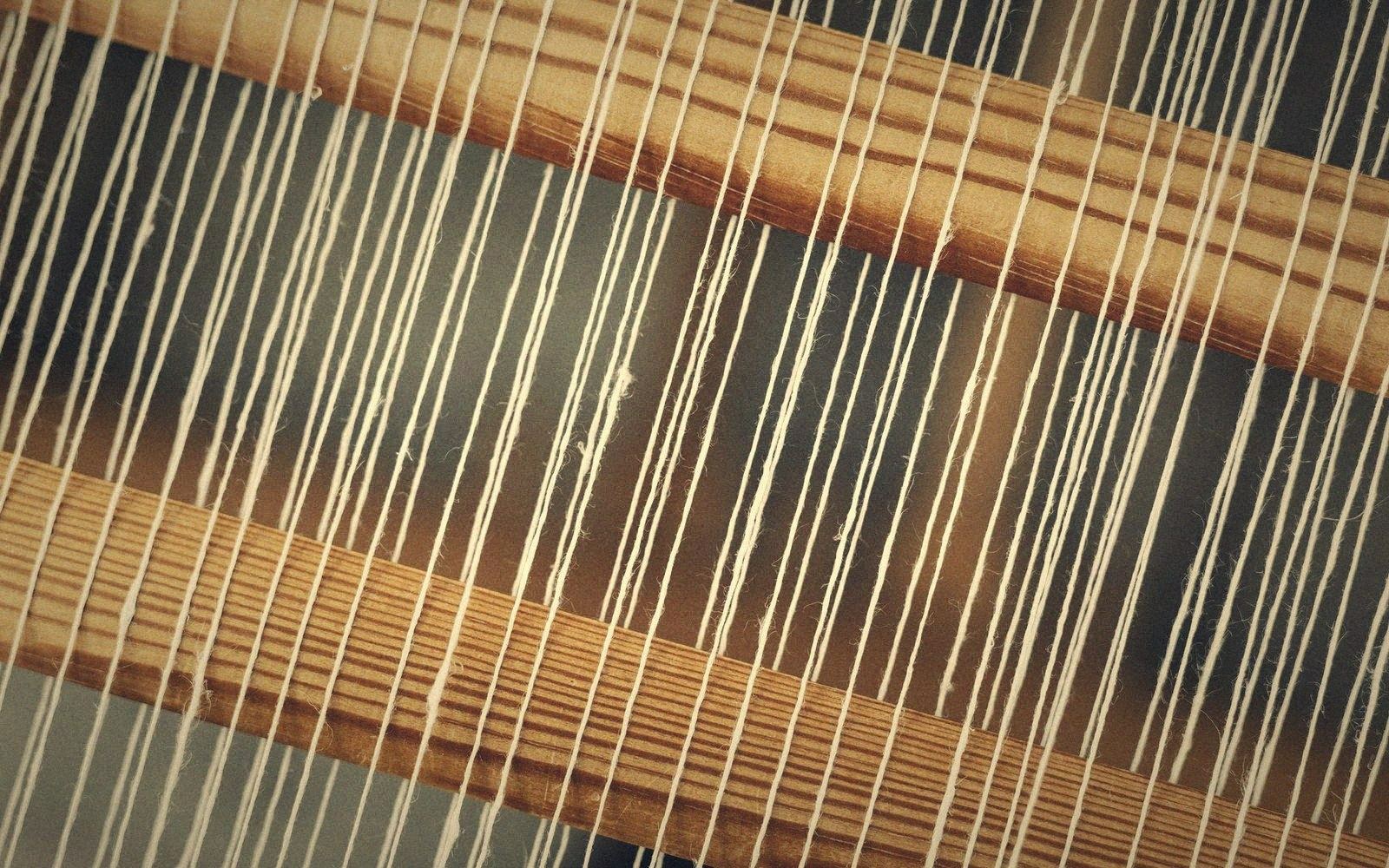
Depth of color is built through repetition. A single dip into a well-maintained vat produces a light, somewhat fragile blue. Traditional dyers in Guatemala's Sacatepéquez region or in the Sierra Juárez of Oaxaca would dip and air the cloth — or the skein of yarn before it was ever warped onto a backstrap loom — a dozen or more times. Each pass adds another molecular layer. A properly deep navy may require twenty or thirty dips across several days. The depth achieved this way has a quality that synthetic indigo, applied in a single industrial bath, rarely matches: it appears almost dimensional, slightly different in shade when the light shifts.
Fixation requires no separate mordant step in the usual sense. Indigo is what dyers call a vat dye — it locks physically into the fiber structure through insolubility rather than through a metallic bridge the way cochineal requires an alum or iron mordant. This is one reason indigo-dyed cloth fades differently: it abrades from the outer surface of the fiber rather than losing color uniformly. Worn denim shows this perfectly, the color retreating from the raised threads of the weave first.
The raw material for Mesoamerican indigo came overwhelmingly from Indigofera species cultivated across what is now El Salvador, Guatemala, and southern Mexico. In the colonial period, indigo ranked among the most commercially significant exports from Central America, processed into dried cakes of paste and shipped to European textile industries. That trade collapsed in the late nineteenth century when synthetic indigo — first produced in Germany in 1897 — undercut natural production almost immediately. What survived was what the market couldn't reach: small-scale, community-based vat dyeing, practiced by dyers who needed the color for cloth they were making themselves. That survival is why the vat is still built today.