Reverse appliqué
Layers of cloth stacked and then cut away rather than added — the mola panel and how the design is found by subtraction.
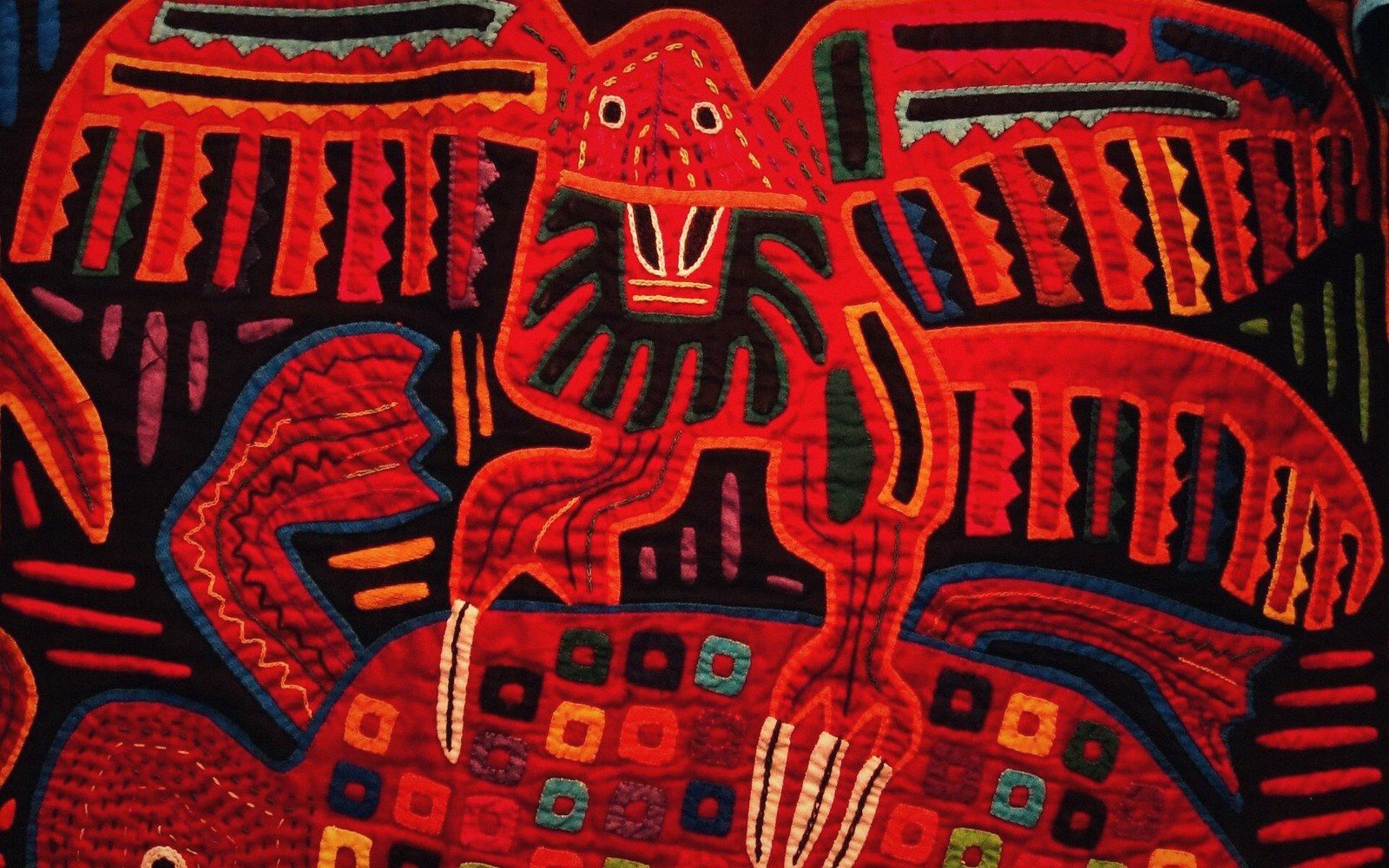
Cloth cut away to find the design: how stacked layers and careful scissors produce an image that could not be sewn from the front.
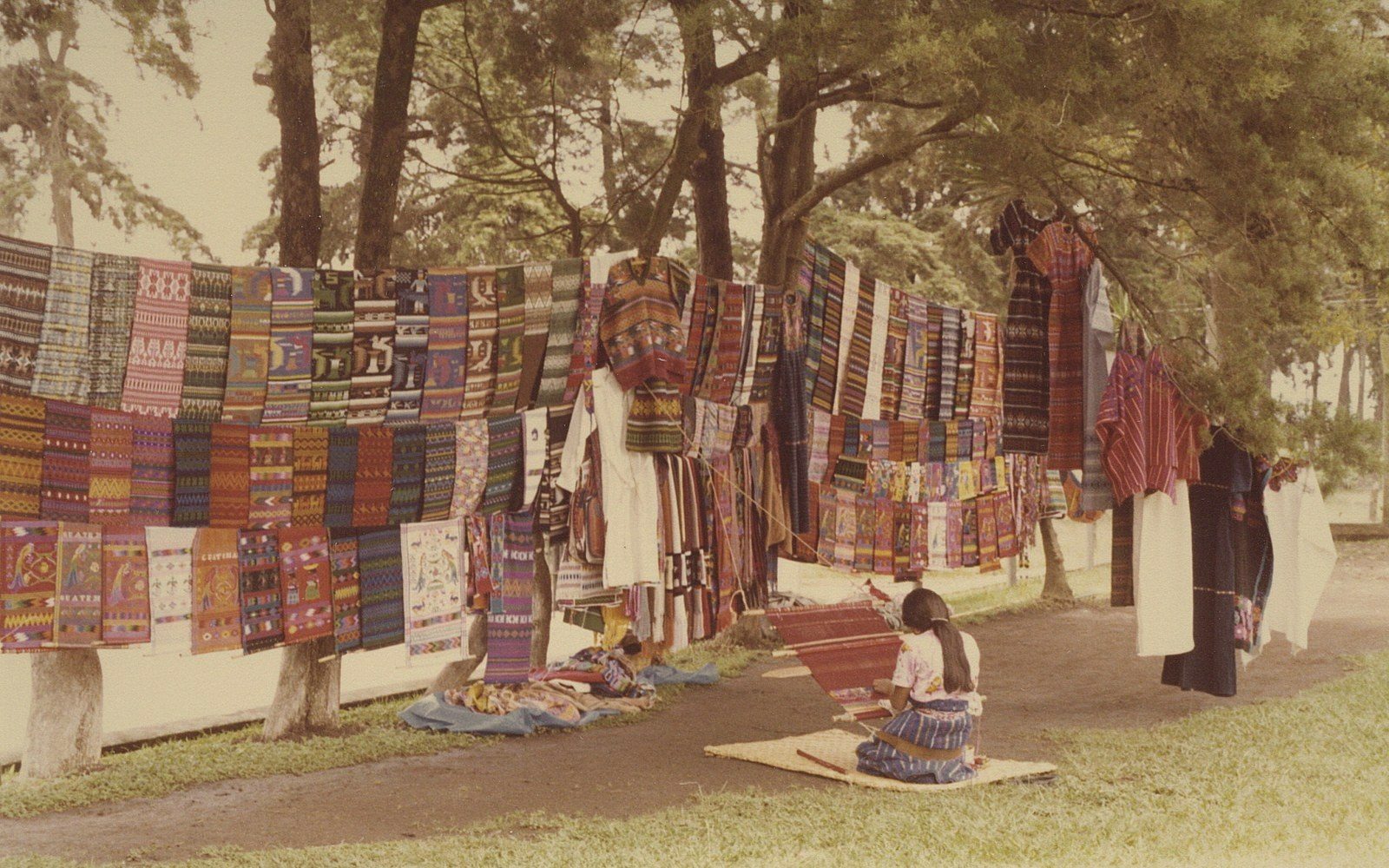
The Method Is Subtraction
Reverse appliqué begins with fabric laid in layers — typically two to seven pieces of cloth stacked in a precise order, each a different colour. The maker basts them together, then draws or freehand-cuts a design from the top layer downward, revealing the colour beneath. Raw edges are turned under with a needle and stitched flat, a stitch at a time, so that the folded edge buries itself cleanly into the layer below. The image builds through excavation rather than addition: colour appears where cloth is removed, not where it is placed.
The most fully developed tradition in the Americas is the mola, a cloth panel made by the Guna people of the San Blas archipelago and Darién coast of Panama. A finished mola panel — typically one of a pair sewn into the front and back of a woman's blouse — may carry five or more layers.
The maker works the top layer first, cutting channels and islands of colour, then descends through additional strata, cutting narrower windows that let a third or fourth colour show through the channels already cut in the layers above. The result is a design with its own stratigraphy: broad colour fields framed by progressively finer outlines, each outline the edge of one buried layer.
Traditional Guna mola imagery draws on animals, plants, spirits and geometric abstraction, often all within a single panel. The design is not drafted in full before cutting begins; experienced makers carry the composition in mind and adjust as they cut, which means the final image is partly discovered in the making. Motifs can be bilaterally symmetric or freely composed. Background space — what surrounds the main image — is typically filled with thin parallel cuts called dientes (teeth) that keep the eye moving across the surface.
The stitching is the discipline. A needle picks up a thread or two of the lower layer, catches the turned edge of the upper one, and pulls both flat. Done properly, the seam is almost invisible from the front; done poorly, the raw edge lifts and the layering reads as sloppy. The thread matches the layer being stitched, not the layer being revealed. A large panel of moderate complexity takes weeks of sustained work.
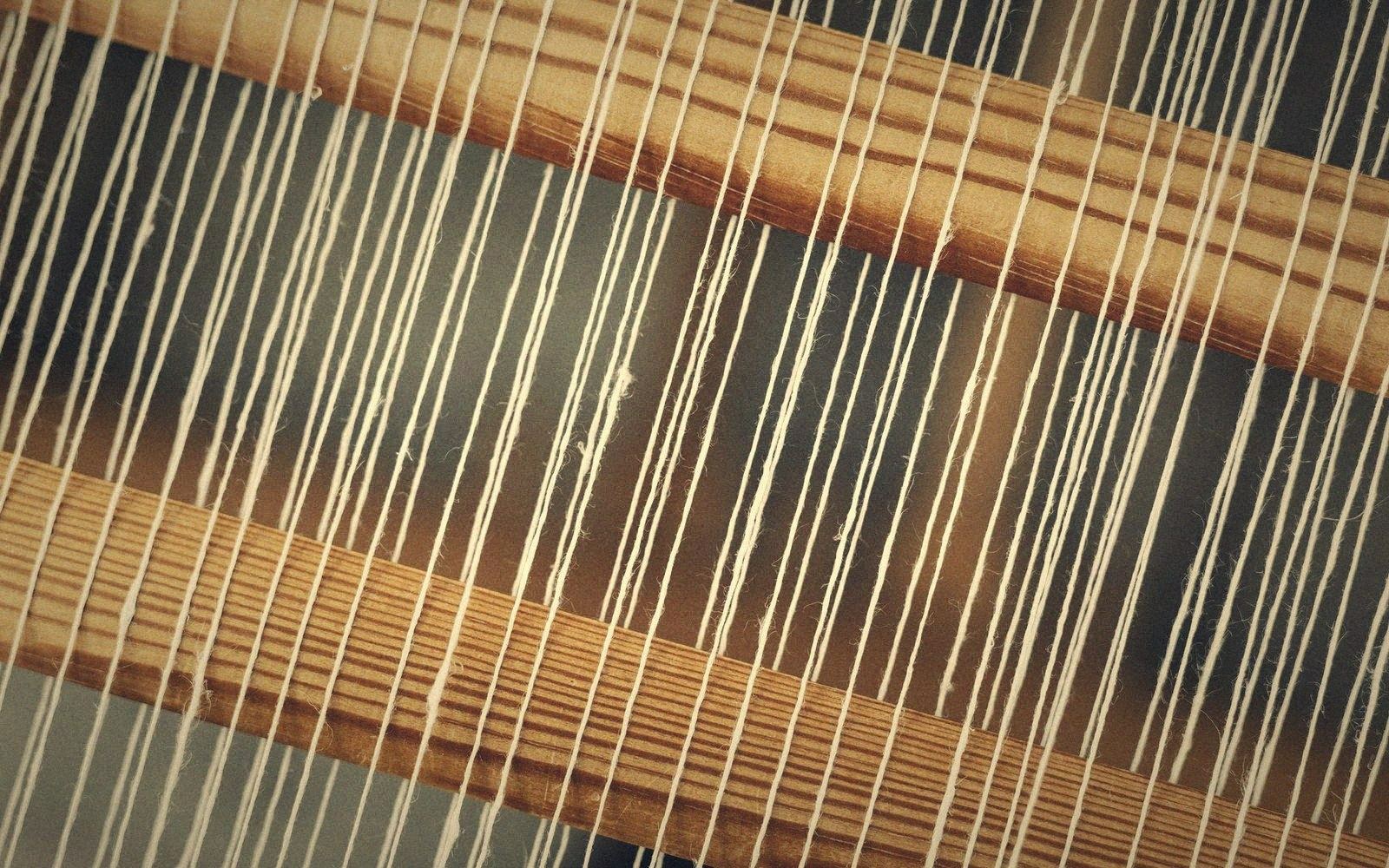
Reverse appliqué appears in other Andean and Mesoamerican textile traditions in simpler forms — two or three layers, broader cuts — but the Guna mola remains the deepest elaboration of the principle: cloth as material to be carved, colour released layer by layer, the image latent in the stack before the first cut is made.