What a pattern tells you
Motif, colour and layout that identify a village rather than a country.
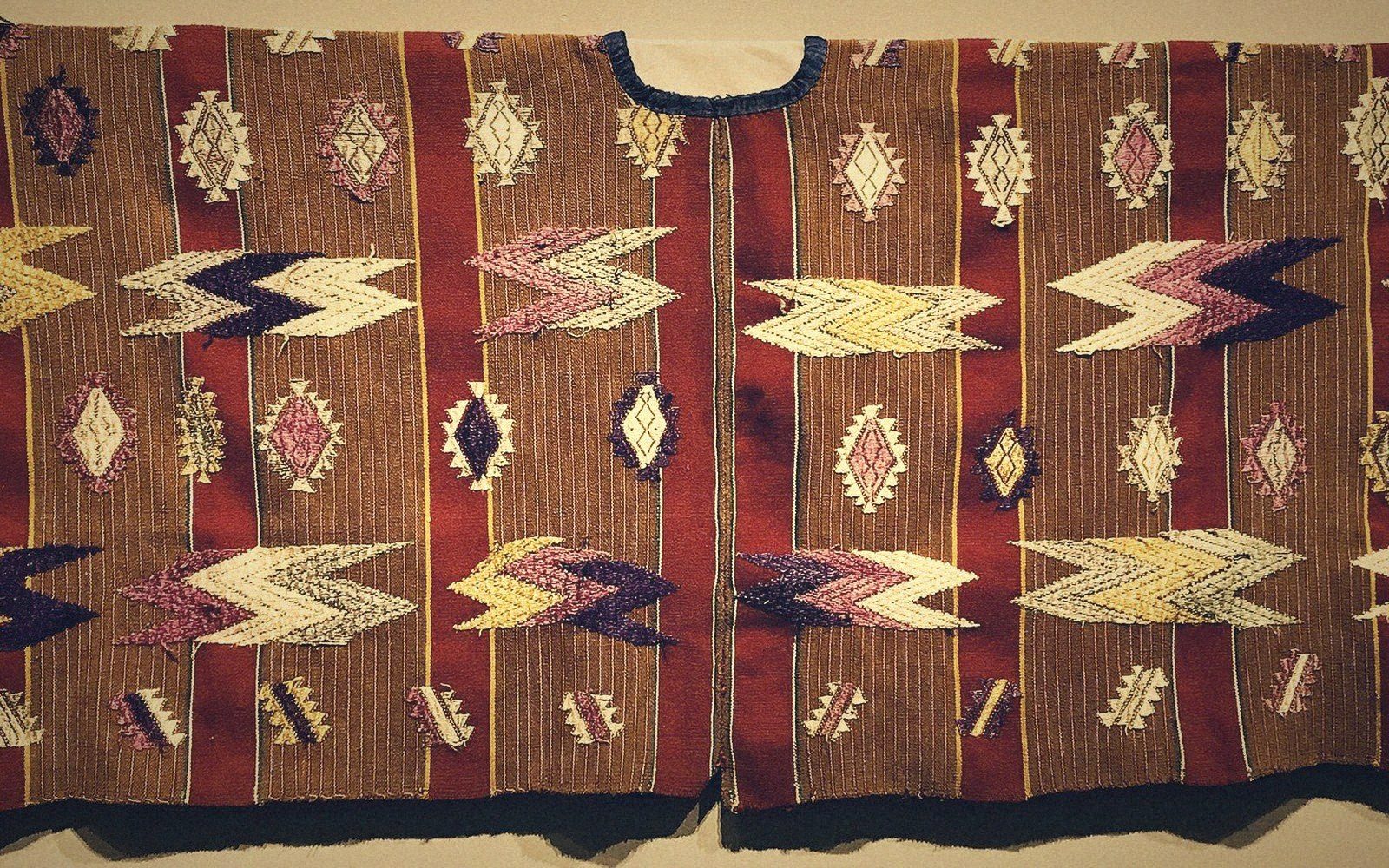
A woven textile from highland Guatemala or Oaxaca carries its address in its cloth — not the country, not the region, but the village.
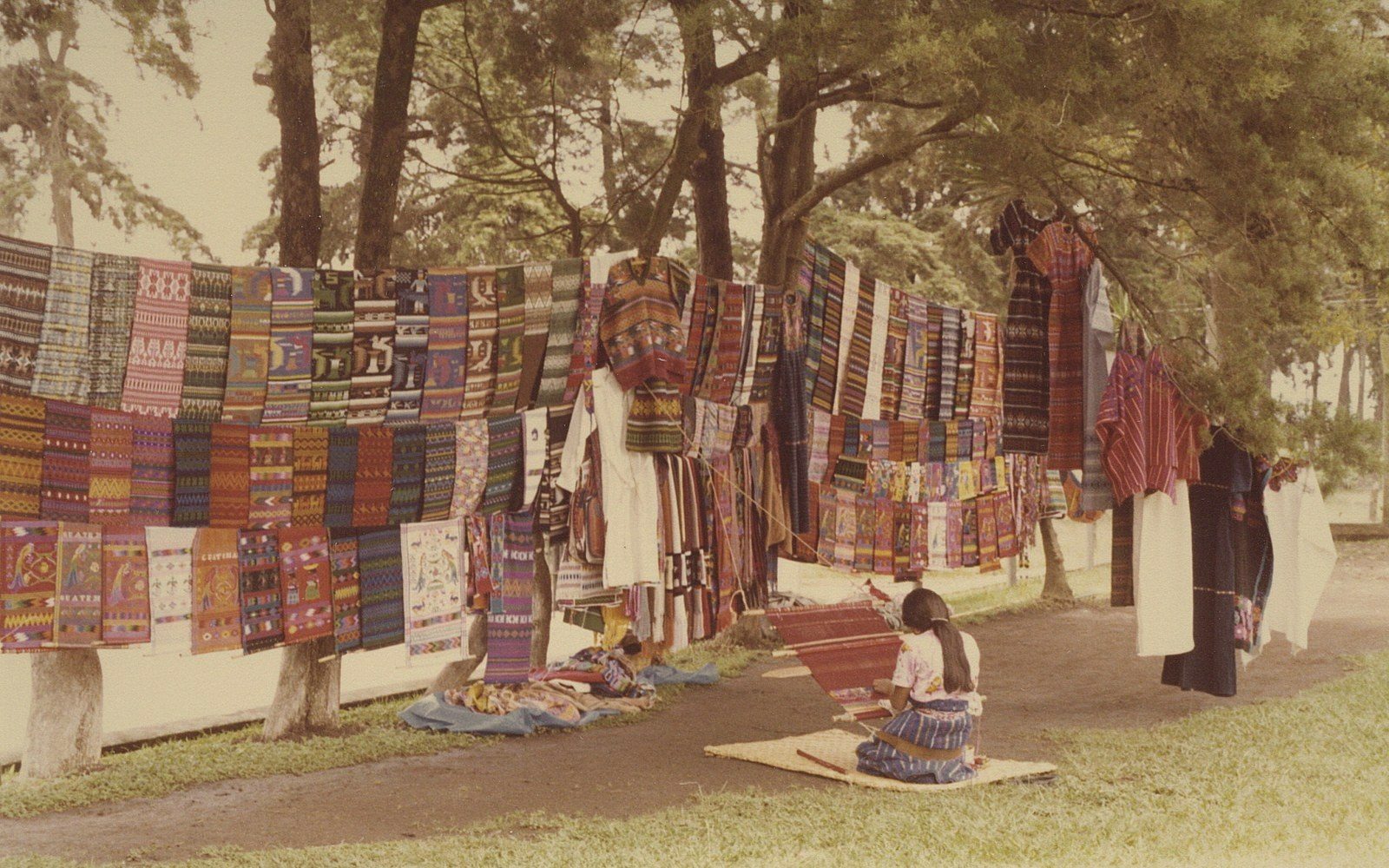
The logic of local pattern
A huipil (the tunic-form garment woven and worn across Mesoamerica) woven in San Juan Sacatepéquez reads differently from one made twenty kilometres away in Santiago Sacatepéquez — different ground colour, different proportions of stripe, different figures set into the supplementary weft. To a trained eye, these differences are not decorative preference; they are identity markers, as specific as a postal code and considerably older.
The information is carried at three levels: colour field, structure and motif. The ground colour — the base weave before any supplementary patterning begins — often signals the community immediately. In the Tzotzil-speaking highlands of Chiapas, Zinacantán is known for its flower-heavy pink and fuchsia grounds; Chamula, a short distance away, works in white with dark wool stripes.
No one would confuse them. The second level is structural: the ratio of stripe to plain ground, the spacing of colour bands, whether the supplementary motifs sit in a single register or repeat across the full width. These proportions are passed from weaver to weaver, learned on the backstrap loom as a body memory before they are ever described in words.
Motif — the actual figure worked into the supplementary weft — is the most legible level for outsiders, but the least stable. Animals, birds, double-headed eagles borrowed from colonial heraldry, stylised maize plants: individual weavers adapt and add. What does not change easily is the underlying grid that governs scale and spacing. A figure that is eight warp threads wide in one generation tends to stay eight warp threads wide in the next, because the loom's structure encodes the rule.
Colour works alongside structure. Communities that have access to cochineal — the carmine dye taken from insects farmed on nopal cactus — have historically produced a particular range of reds and purples that synthetic dyes replicate but do not quite match. A locally dyed red and a commercially dyed red sit differently in the same weave, and experienced buyers in regional markets still use this as a provenance check.
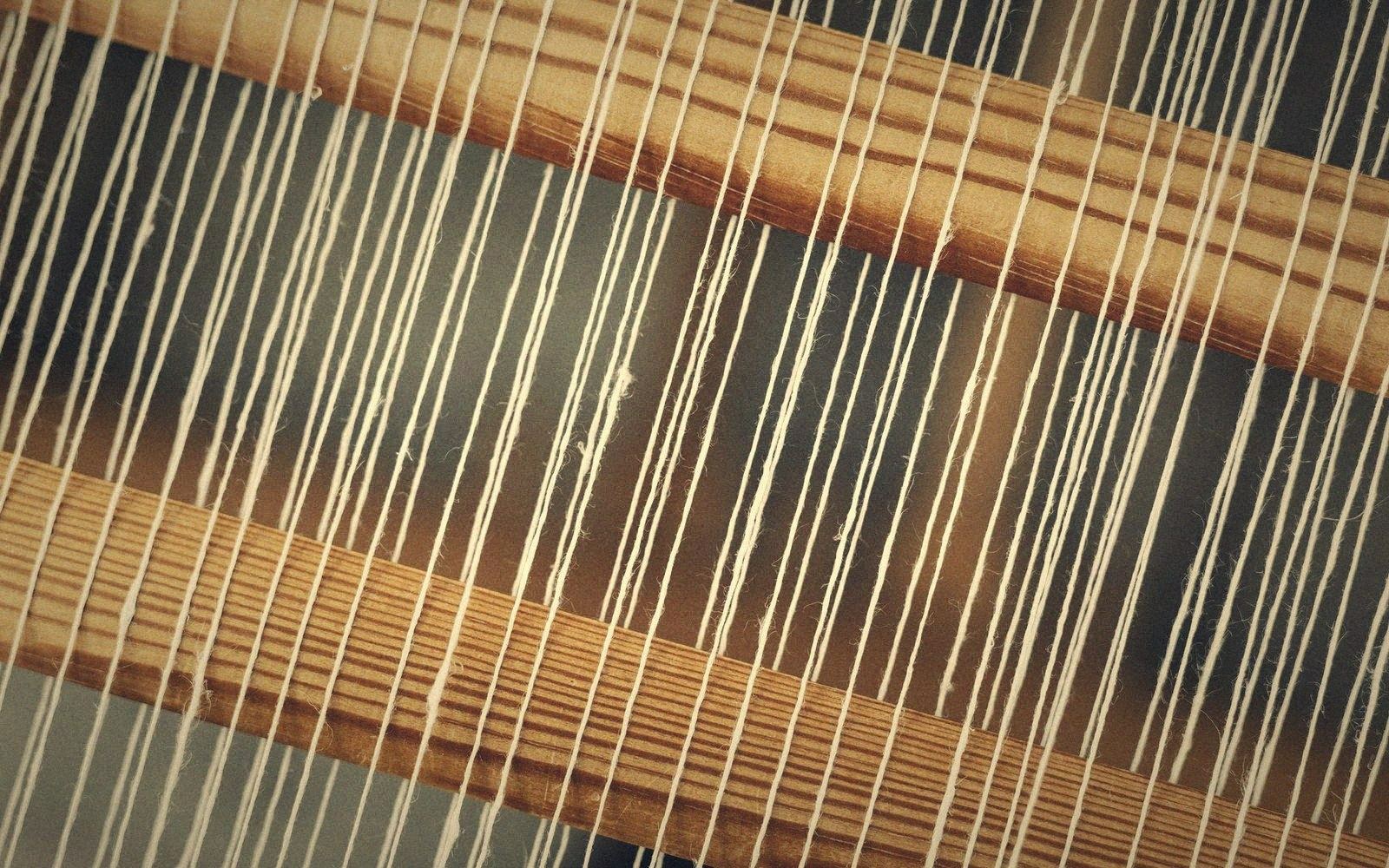
The information encoded in a textile is not fixed symbolism, catalogued and closed. It is a live convention, maintained by weaving communities who know what their cloth should look like and will notice when it doesn't. The pattern is not decoration applied to cloth — it is the cloth, and it says, precisely, where it comes from.